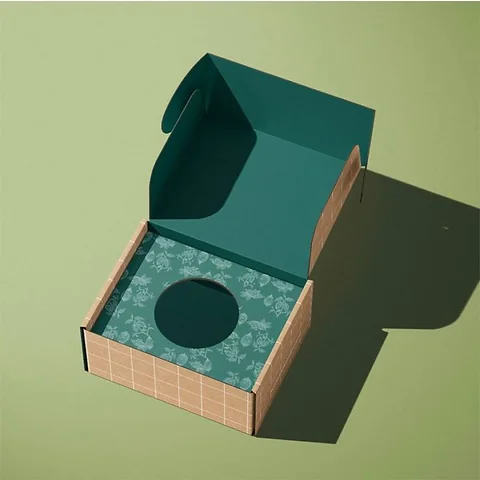
 Custom Mailer Boxes
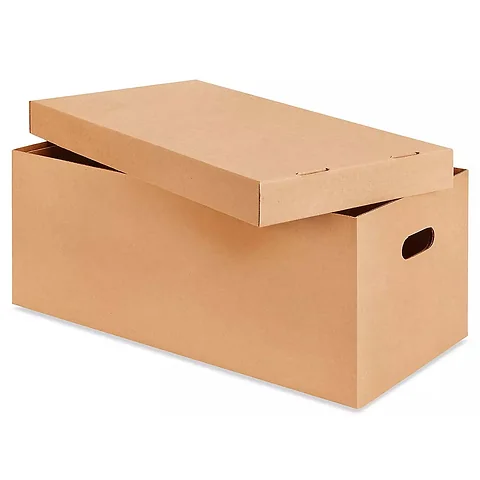 Custom Shipping Boxes
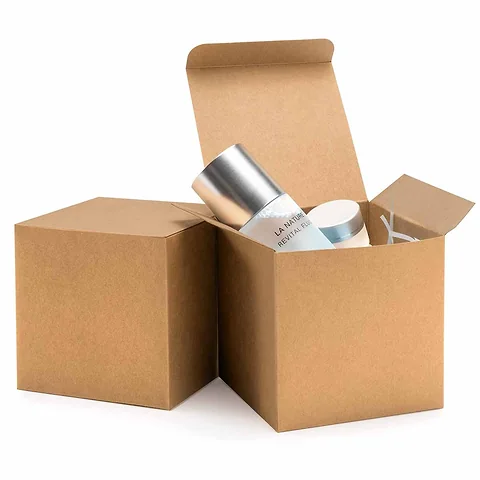 Custom Cardboard Boxes
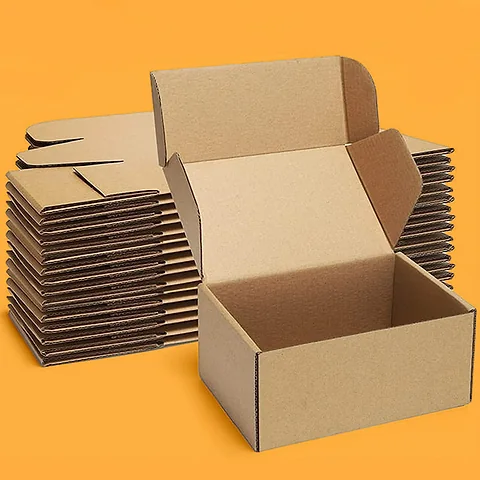 Custom Kraft Boxes
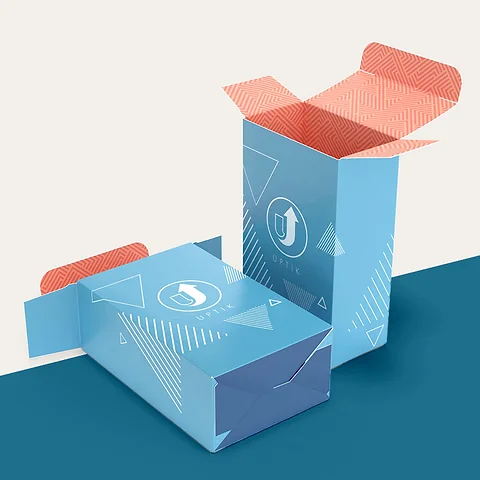 Custom Product Boxes
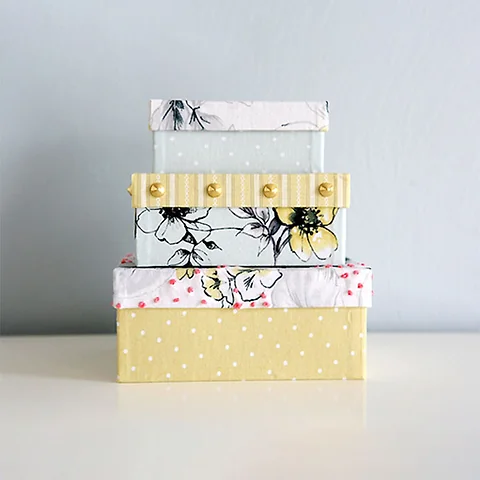 Custom Retail Boxes
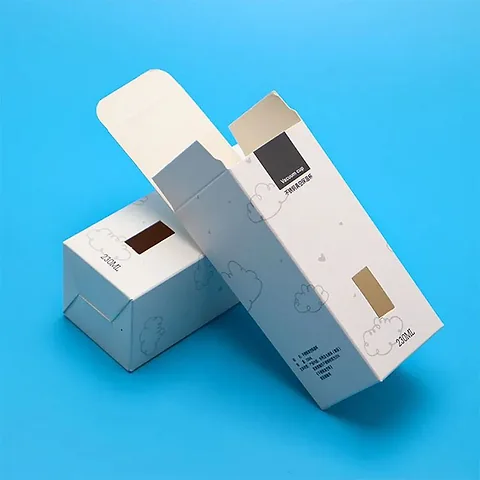 Custom Tuck End Boxes
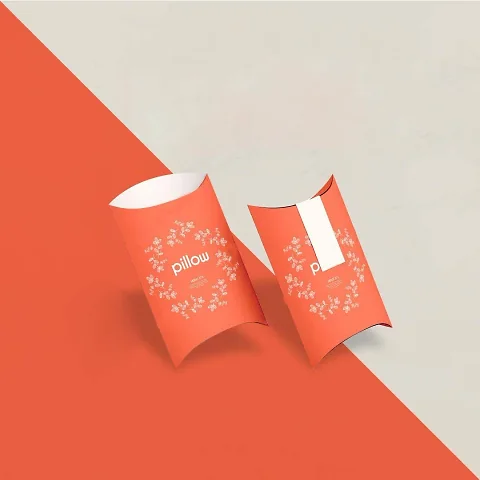 Custom Pillow Boxes
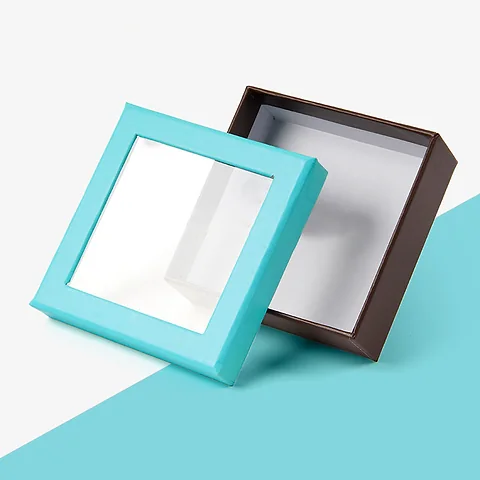 Custom Window Boxes
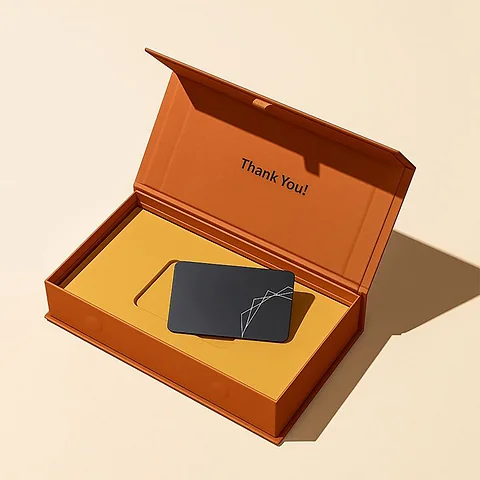 Custom Rigid Boxes
 Custom Gift Boxes
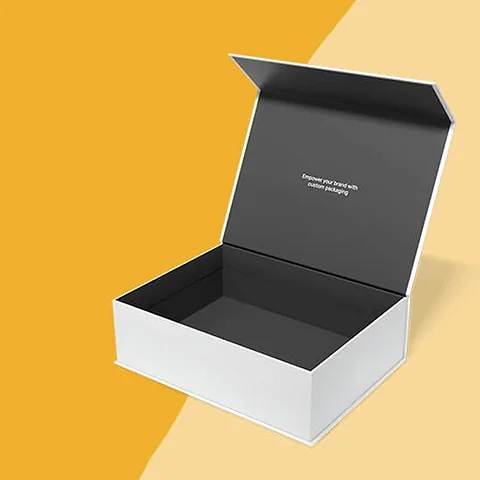 Custom Magnetic Boxes
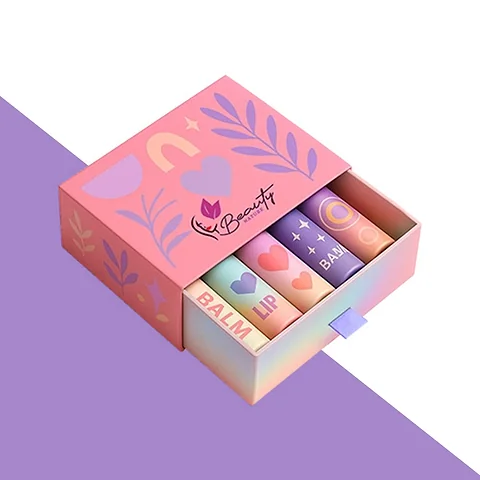 Custom Sleeve Boxes
 Custom Printed Boxes
 Custom Boxes with Logo
 Custom Box Inserts
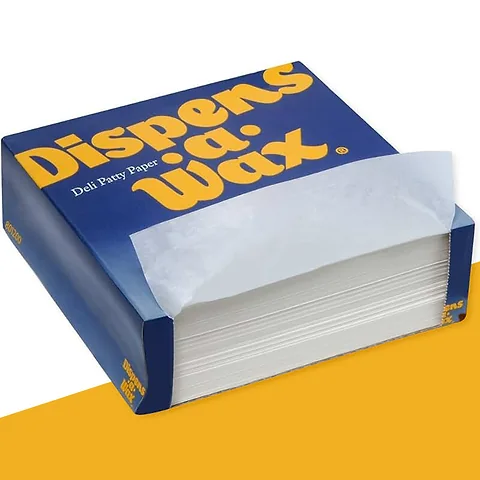
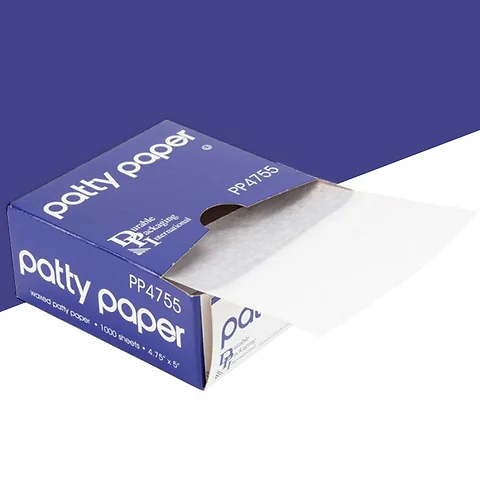
Custom Patty Paper
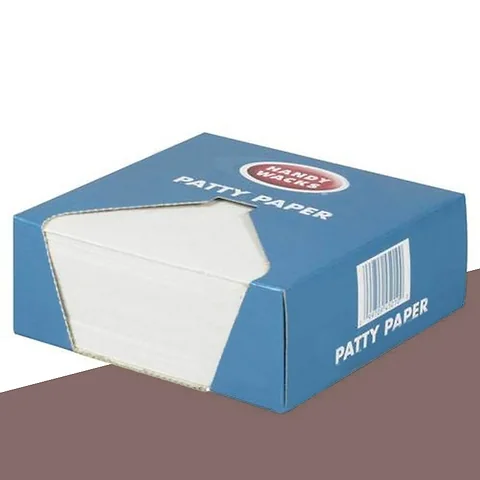
Raw burger patties stick together the moment they are stacked, which slows down a grill shift and spoils their shape. Custom patty paper is a pre-cut square of coated paper that goes between each patty, so butchers, burger restaurants and producers can stack, chill and separate them cleanly.
- Design proofFree, approved by you before printing
- PriceCustom quote by email within one working day
- Production4–7 working days after proof approval
- DeliveryFree and tracked, UK mainland, 2–3 working days
- Misprints or damageReported within 10 days, reprinted or refunded
What Patty Paper Is For
Anyone who presses burgers by hand or by machine knows the problem. Fresh mince is soft and slightly tacky, so two patties placed on top of each other bond together and tear when you pull them apart. A sheet of patty paper between them stops that completely. Each patty keeps its shape, lifts away cleanly and goes on the grill in one piece.
The paper also makes storage tidier. A stack of interleaved patties can be boxed, wrapped or bagged and kept in a chiller or freezer, then separated one at a time without thawing the whole block. For a busy kitchen, that means faster service and less waste.
Patty paper is used beyond burgers too. Kitchens put it between portions of cookie dough, under pastry rounds, between sliced cheese or around hand-shaped items like fishcakes and falafel.
For businesses that sell raw burgers to the public, interleaving also improves how the product looks. A neat stack of evenly shaped patties with clean paper between them looks fresh and well made in a counter display or a retail tray, and customers can see each patty clearly. Cooked burgers served at the same counter are wrapped in printed burger wrapping paper.
Paper Types and Coatings
The paper needs to release easily from raw meat and stand up to moisture. Most patty paper is a thin paper with a wax or similar release coating on one or both sides. The coating stops fat and moisture soaking in and lets the patty slide off. Some kitchens prefer a greaseproof or baking-style paper for products that are cooked on the sheet.
Single-side coating is fine for many uses, while double-sided coating suits patties pressed on both faces or stacked in tall columns. Food-contact grade paper is available on request, and we will confirm the specification with you before production.
Weight matters a little. A slightly heavier sheet is easier to handle with greasy fingers and less likely to crumple in a patty press, while a lighter sheet is more economical for high volumes.
Ask yourself how long the patties will be in contact with the paper. For same-day service, a light coated sheet is ample. For product that will be frozen for weeks, a better coating helps the sheet release cleanly after storage, without fibres sticking to the meat when it is peeled away. The coatings are compared with those on freezer paper for long storage.
Often ordered by
- Butchers
- Burger restaurants and food trucks
- Meat producers and wholesalers
- Bakeries separating dough portions
- Delis
- Plant-based food producers
Popular Patty Paper Sizes
Sizes are in mm. Every order is cut to your size, so any size between these rows is fine.
| Size | Often used for |
|---|---|
| Slider square 100 x 100 mm | Mini burgers and sliders |
| Standard square 140 x 140 mm | Quarter-pound patties |
| Large square 165 x 165 mm | Wide and smash patties |
| Press disc 120 mm diameter | Hand presses with round moulds |
| Interleave sheet 200 x 200 mm | Dough portions and large items |
Not sure of the size? Send the product measurements and we work out the rest.
Styles
- Square interleaving sheets
- Round press discs
- Custom cut sizes
Materials
- Wax-coated paper
- Double-sided coated paper
- Greaseproof paper
- Food-contact grade paper on request
- Plain unprinted
- One colour print
- Two colour print
- Repeat pattern logo
Finishes
- Single-side coating
- Double-side coating
Extras
- Counted stacks
- Dispenser boxes
- Matching printed bags and labels
Not sure which material or finish suits? Tell us how the sheet will be used and we suggest one in your custom quote.
Production and Delivery
Production takes 4–7 working days after you approve the free design proof. Delivery to the UK mainland is free and tracked, and arrives in 2–3 working days once the order leaves production. The tracking link comes to you by email.
Reprints and Refunds
Check the order when it arrives. If anything is misprinted or damaged, report it within 10 days with a photo and we reprint or refund the items affected. Read the full returns and reprints policy.
Need it by a date?
Tell us the date with your sizes and we plan the proof and production around it.
Patty Paper Specification
| Style | Square interleaving sheets, Round press discs, Custom cut sizes |
|---|---|
| Material | Wax-coated paper, Double-sided coated paper, Greaseproof paper, Food-contact grade paper on request |
| Plain unprinted, One colour print, Two colour print, Repeat pattern logo | |
| Finish | Single-side coating, Double-side coating |
| Extras | Counted stacks, Dispenser boxes, Matching printed bags and labels |
| Size | Made to your size in mm |
| Minimum order | Low, quoted per job |
| Price | From £0.25 a sheet; custom quote by email within one working day |
| Proof | Free design proof before printing |
| Production | 4–7 working days after proof approval |
| Delivery | Free tracked UK mainland delivery, 2–3 working days |
Choosing the Right Square
Patty paper is cut to a square slightly larger than the patty, so the edge of the sheet sticks out for gripping. If you press a 115 mm patty, a sheet around 140 to 150 mm square gives a comfortable margin. Smaller sliders need smaller squares, and smash burgers or wide patties need larger ones.
Check your patty press if you use one. Many presses are designed around a particular sheet size, and paper cut to fit the mould speeds up the process because the sheet drops straight in without trimming.
If you make more than one patty size, consider whether one sheet size can cover both. A sheet that suits your largest patty also works under a smaller one, although the extra margin uses more paper. Many kitchens stock two sizes, one for standard patties and one for sliders, which keeps waste low without complicating storage. Our guide to measuring products for packaging covers round items against a square sheet.
- Small squares for sliders and mini burgers
- Standard squares for quarter-pound patties
- Large squares for wide or smash patties
- Round discs cut to fit specific presses
- Interleaving sheets for dough and pastry portions
Printed Patty Paper for Branding
Plain white patty paper is the everyday choice, but printed sheets are becoming popular with butchers and burger brands who sell patties to take home. A logo printed on the corner of each sheet turns an ordinary pack of burgers into a branded product, and customers notice it when they separate the patties at home.
Printing is usually one or two colours with inks applied to the side that does not touch the food, or to an area beyond the edge of the patty. Simple logos, a repeating pattern or a short line such as the shop name and website work best. For retail packs, print can tie in with your trays, labels and bags so the whole pack looks consistent.
Printed paper works well alongside branded burger boxes or wraps. If you already use printed packaging for cooked burgers, matching the colours and logo on your patty paper gives customers buying raw patties to cook at home the same experience as those eating in. One-colour print on a coated sheet is explained in the print and finish options guide.
Working With Patty Paper in the Kitchen
Keep the paper close to where patties are formed. A dispenser or a simple open box on the bench lets staff take one sheet at a time without fumbling, which matters when hands are covered in mince. Paper supplied in neatly counted stacks or bundles is quicker to work with than loose sheets.
Store paper away from heat and humidity so it does not curl or stick together. For freezing, stack patties with paper between each one, wrap the stack well, and label it with the date. When frozen patties are interleaved properly, they can be peeled apart straight from the freezer and cooked from frozen if your process allows it. Thinner sheets for interleaving pastry and cheese are covered on the greaseproof paper for interleaving page.
Who Uses Patty Paper
Butchers making burgers for the counter and for retail packs use it every day. Burger restaurants and food trucks that press their own patties rely on it to prepare stock before service. Meat producers supplying wholesale burgers use interleaving paper to pack cases for restaurants and caterers.
It is also found in bakeries and patisseries for separating portions of dough, in delis for stacking sliced products and in plant-based food businesses forming vegetable or bean patties that are even stickier than meat.
Farm shops and online meat box companies use it too, packing burgers for delivery with paper between each patty so customers can take out exactly what they need. A logo on the paper reminds them where the burgers came from when they go back to the freezer for the next batch.
Match the Square to the Pressed Patty, Not the Raw Ball
A patty grows when it is pressed, so size the paper to the finished patty with a 10 mm margin all round. A quarter-pounder pressed to 120 mm wants the 140 mm square; a smash patty that spreads to 150 mm on the grill still only needs the paper it was stacked in, but if you press on the paper itself, choose the larger square so the edge never rolls into the meat. Decide plain or printed, pick the coating by whether the patties are chilled for days or frozen for weeks, and tell us a rough monthly quantity.
A custom quote comes by email within one working day, and for printed paper a free design proof is sent before anything is run; production takes 4 to 7 working days after approval and paper arrives by free tracked delivery across the UK mainland in 2 to 3 working days. Minimums are quoted per job, and packs that arrive damaged or misprinted are reprinted or refunded if reported within 10 days. Butchers who also wrap the finished pack use the heavier printed butcher paper for counter sales.
Design Your Patty Paper
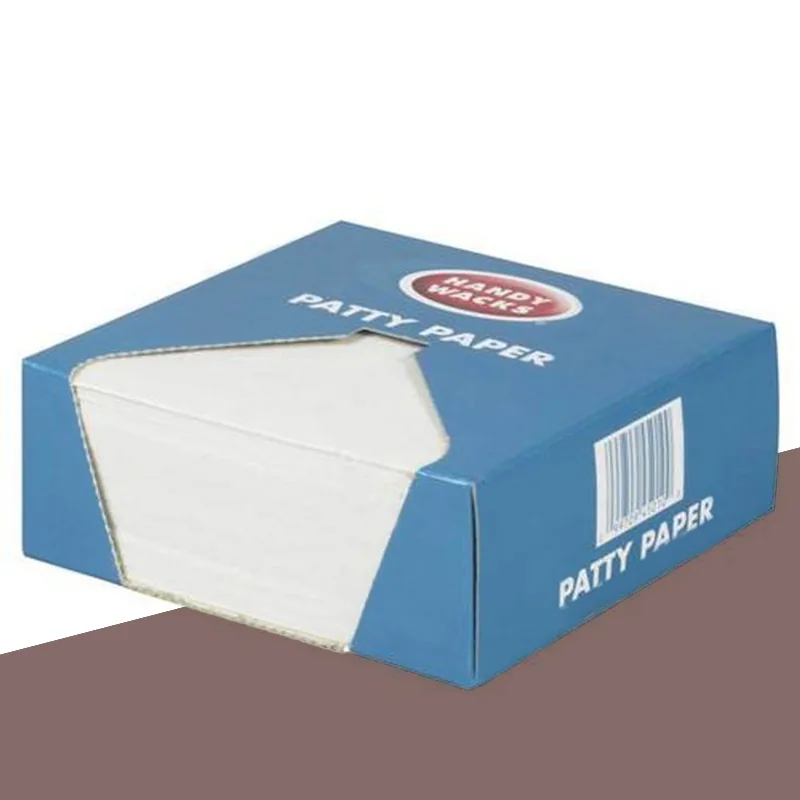
Choose the patty paper photo closest to what you have in mind, add your logo, drag it into place and set the size. Send it with your sizes and we reply with a custom quote and a free design proof.

Drag the logo, or select it and use the arrow keys (Shift moves faster, + and − resize).
Related Products
Other packaging that is often ordered alongside patty paper.
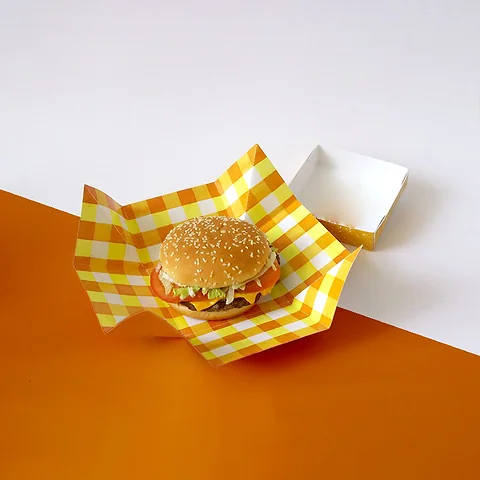
Burger Wrapping Paper
Custom burger wrapping paper is the greaseproof sheet folded tightly around a burger so it holds together, stays warm and…
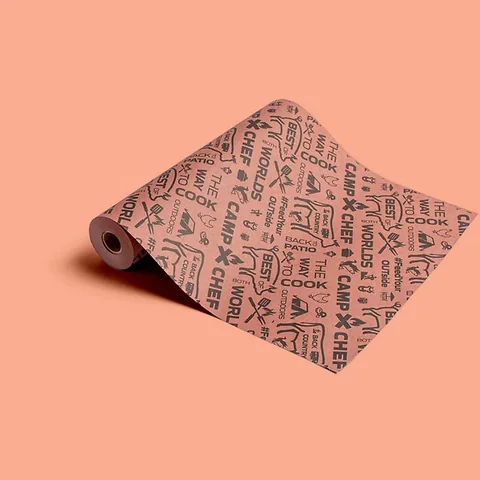
Butcher Paper
Custom butcher paper is a strong, uncoated or lightly treated kraft sheet that wraps meat neatly at the counter, rests brisket…
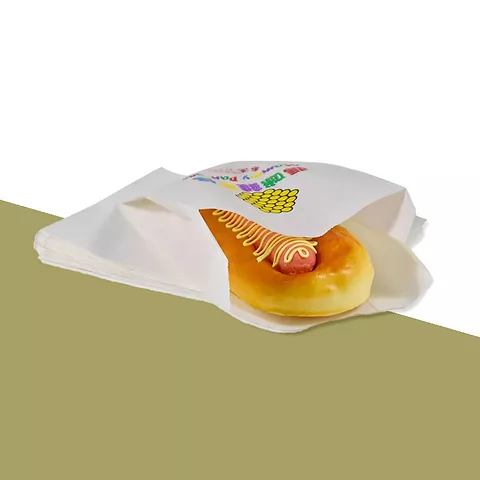
Greaseproof Paper
Custom greaseproof paper is a dense, grease-resistant sheet that holds back butter, oil and sauce long enough for a customer…
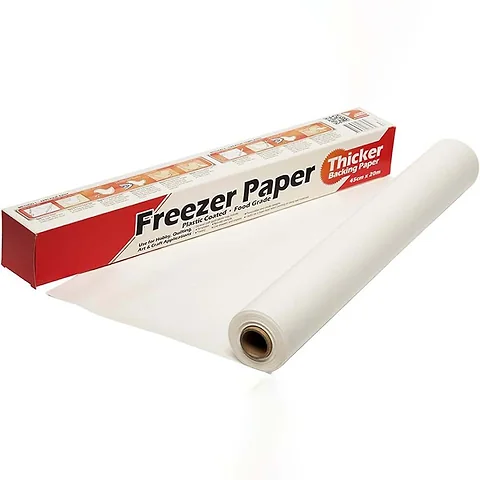
Freezer Paper
Custom freezer paper has a plastic-coated side that goes against the meat or fish and a plain paper side that faces out, so it…
Patty Paper Questions
What buyers ask before ordering patty paper.
Why use patty paper instead of cling film?
Patty paper is cut to size and slides off cleanly, so patties keep their shape and separate in one piece. It is quicker to handle at volume than tearing film from a roll.
What size patty paper do I need for a quarter-pound burger?
For a patty of around 110 to 115 mm, a sheet of about 140 to 150 mm square gives enough margin to grip and separate the patties.
Can patty paper go in the freezer?
Yes, interleaving frozen patties with paper is one of its main uses. The patties can then be separated straight from the freezer.
Is the paper coated on one side or both?
Both are available. Double-sided coating suits patties pressed on both faces or stacked high, while single-sided coating suits lighter use.
Can you print our butcher's shop logo on the sheets?
Yes, one or two colour printing can add your logo or a pattern, positioned away from the area that touches the food.
Does paper that sits between raw patties need to be food-contact grade?
Yes, as the sheet touches raw meat on both faces. Food-contact grade coated paper can be specified on request and the specification is confirmed with you before anything is printed or cut.
Can you cut paper to fit my burger press?
Yes, squares or round discs can be cut to suit a specific press so the sheet drops straight into the mould.
Does patty paper work for plant-based burgers?
Yes, it is very useful for vegetable and bean patties, which tend to be stickier than meat.
Can I use patty paper for dough and pastry?
Many bakeries use the same sheets to separate cookie dough portions and pastry rounds before chilling.
How is patty paper packed?
It is supplied in neat stacks, packed in boxes that keep it flat and clean until used.
Get a Price for Your Patty Paper
Fill in as much as you know. Sizes are in mm (internal sizes for boxes). If you have artwork, attach it; if not, a logo is enough to start the proof.
We reply with a custom quote by email within one working day, then send a free design proof before anything is printed.
- Phone+44 7578 382054
- WhatsAppMessage us
- Emailinfo@shopcustomboxes.co.uk
- HoursMonday to Friday, 9 am to 5.30 pm UK time
- OfficeOffice 704, 85 Dunstall Hill, Wolverhampton, WV6 0SR