 Custom Mailer Boxes
 Custom Shipping Boxes
 Custom Cardboard Boxes
 Custom Kraft Boxes
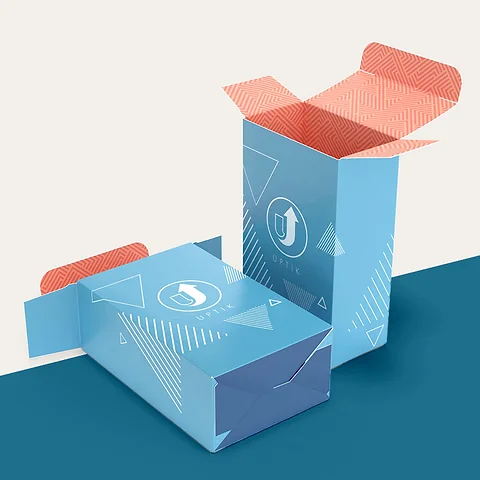 Custom Product Boxes
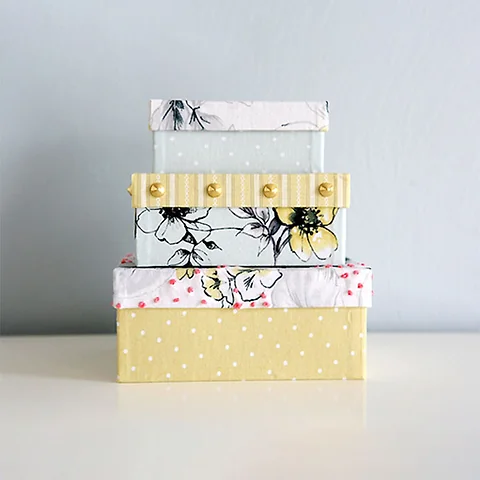 Custom Retail Boxes
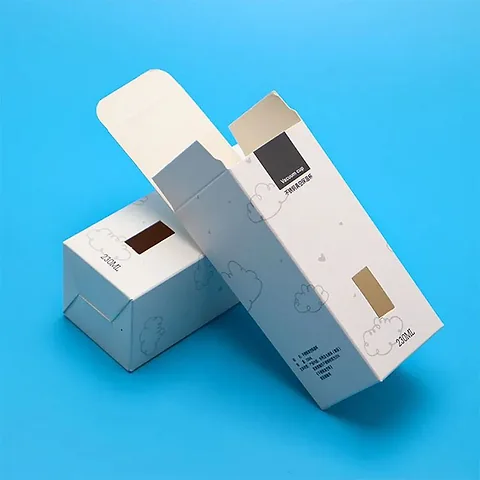 Custom Tuck End Boxes
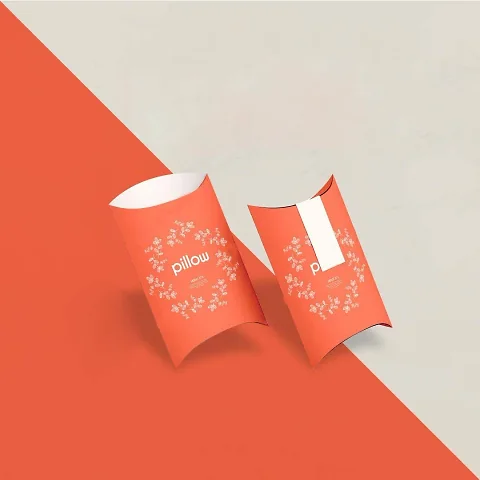 Custom Pillow Boxes
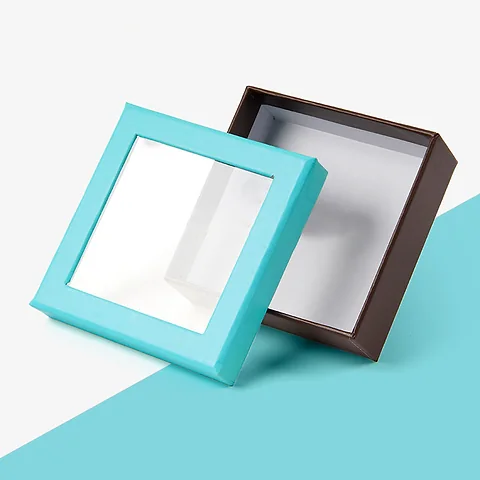 Custom Window Boxes
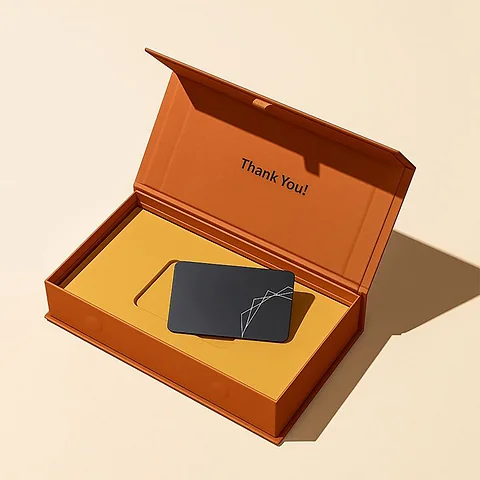 Custom Rigid Boxes
 Custom Gift Boxes
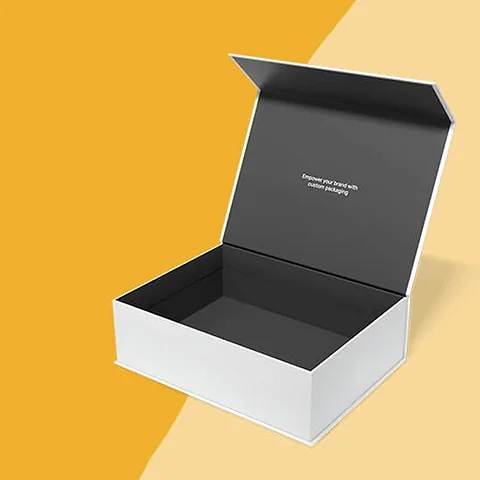 Custom Magnetic Boxes
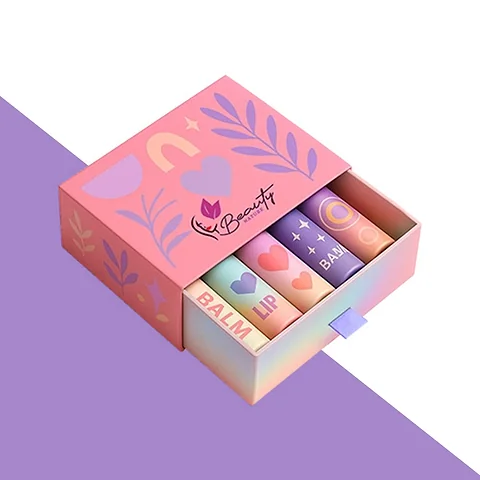 Custom Sleeve Boxes
 Custom Printed Boxes
 Custom Boxes with Logo
 Custom Box Inserts
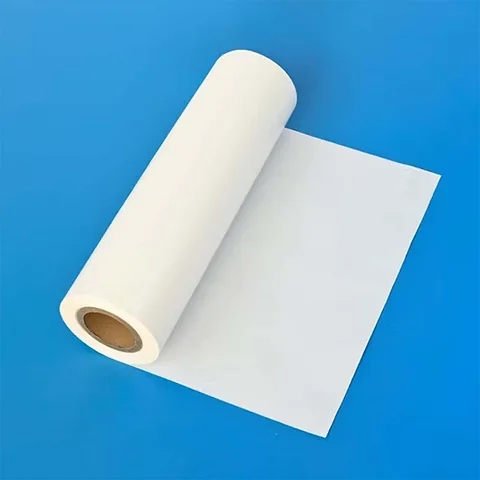
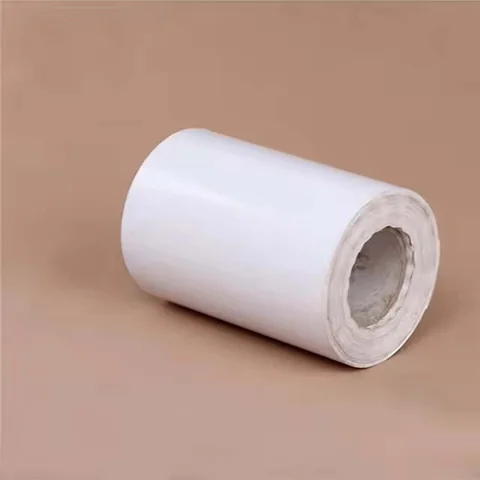
Custom Glassine Paper and Glassine Bags
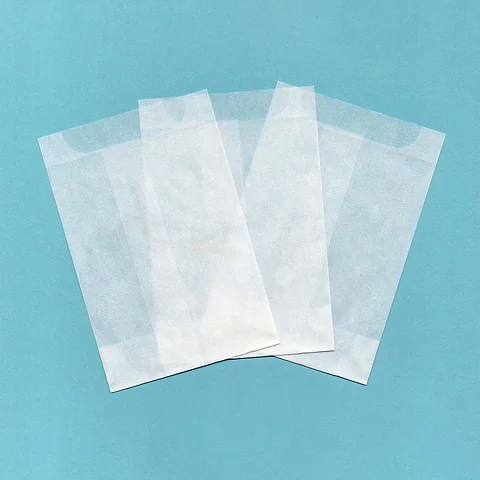
Custom glassine paper is a thin, smooth, translucent sheet with a slightly glossy surface that lets the shape and colour of what is inside show through. Bakeries wrap pastries in it, sweet shops line boxes with it, and collectors keep stamps and prints in glassine sleeves because nothing sticks to it.
- Design proofFree, approved by you before printing
- PriceCustom quote by email within one working day
- Production4–7 working days after proof approval
- DeliveryFree and tracked, UK mainland, 2–3 working days
- Misprints or damageReported within 10 days, reprinted or refunded
What Glassine Actually Is
Glassine starts life as ordinary paper pulp, but it is beaten for longer and then pressed between polished, heated rollers in a process called supercalendering. That squeezes the fibres flat and closes up the spaces between them, which is why the finished sheet is dense, smooth and see-through rather than opaque. No plastic film is laminated to it to get that effect; the finish comes from the paper itself.
The density gives glassine its useful traits. It resists grease and air better than standard paper, it does not shed fibres, and its surface is slippery enough that sticky icing, butter and adhesive release cleanly. Hold a sheet to the light and you can read print through it, which is part of its charm on a bakery counter.
It is also light and thin, so a stack of several hundred sheets takes up very little space under a counter. The thicker, opaque alternative for counters is covered under deli paper for counter wrapping.
Bakery and Sweet Shop Uses
In food, glassine is most often used where presentation matters as much as protection. A croissant or a cookie wrapped in printed glassine looks lighter and more delicate than one in a white paper bag, because the colour of the bake glows through the sheet. Glassine bags are a favourite for macarons, biscotti and loose sweets sold by weight, and cut sheets make neat liners for cake boxes and chocolate trays.
Food-contact grade paper is available on request for anything that touches food directly. Glassine is grease resistant rather than greaseproof in the strictest sense, so it handles buttery pastries well for the time they are on the counter and on the way home, but a very oily product left for days may eventually mark it. Bakeries that want a fuller sheet for wrapping use the printed food wrapping paper for bakeries.
- Pastry and cookie wraps for counter sales
- Flat and gusseted bags for macarons and sweets
- Box liners for cakes, brownies and chocolates
- Interleaving sheets between layers of biscuits
- Sandwich and bagel wraps for cafes
Often ordered by
- Bakeries and patisseries
- Sweet shops
- Cafes
- Stamp dealers and collectors
- Artists and printmakers
- Boutique retailers
Popular Glassine Paper Sizes
Sizes are in mm. Every order is cut to your size, so any size between these rows is fine.
| Size | Often used for |
|---|---|
| Stamp envelope 60 x 95 mm | Stamps and small collectables |
| Macaron bag 90 x 170 mm | Stacks of macarons or biscotti |
| Pastry sheet 250 x 250 mm | Croissants and cookies |
| Box liner 300 x 300 mm | Cake and brownie box bases |
| Retail wrap 500 x 700 mm | Wrapping clothing and gifts |
Not sure of the size? Send the product measurements and we work out the rest.
Styles
- Cut sheets
- Flat bags
- Gusseted bags
- Rolls
- Small envelopes
Materials
- White glassine
- Coloured glassine
- Food-contact grade paper on request
- One colour
- Two colour
- Repeating pattern print
- Plain unprinted
Finishes
- Natural supercalendered gloss
- Frosted white
Extras
- Counter dispenser boxes
- Seal stickers
- Matching tissue paper
Not sure which material or finish suits? Tell us how the sheet will be used and we suggest one in your custom quote.
Production and Delivery
Production takes 4–7 working days after you approve the free design proof. Delivery to the UK mainland is free and tracked, and arrives in 2–3 working days once the order leaves production. The tracking link comes to you by email.
Reprints and Refunds
Check the order when it arrives. If anything is misprinted or damaged, report it within 10 days with a photo and we reprint or refund the items affected. Read the full returns and reprints policy.
Need it by a date?
Tell us the date with your sizes and we plan the proof and production around it.
Glassine Paper Specification
| Style | Cut sheets, Flat bags, Gusseted bags, Rolls, Small envelopes |
|---|---|
| Material | White glassine, Coloured glassine, Food-contact grade paper on request |
| One colour, Two colour, Repeating pattern print, Plain unprinted | |
| Finish | Natural supercalendered gloss, Frosted white |
| Extras | Counter dispenser boxes, Seal stickers, Matching tissue paper |
| Size | Made to your size in mm |
| Minimum order | Low, quoted per job |
| Price | From £0.25 a sheet; custom quote by email within one working day |
| Proof | Free design proof before printing |
| Production | 4–7 working days after proof approval |
| Delivery | Free tracked UK mainland delivery, 2–3 working days |
Beyond Food: Stamps, Art and Retail
Glassine has a long history outside the kitchen. Stamp collectors keep their stamps in glassine envelopes because the smooth, low-friction surface does not scratch or stick to gummed backs. Artists and printmakers use glassine sheets to protect finished prints, pastel drawings and photographs. Jewellers and bead suppliers use small glassine bags to separate tiny items in a way that customers can see without opening.
Retail shops use printed glassine as a stylish alternative to tissue paper, wrapping folded clothing, soaps or candles so the item is visible through the sheet. It gives a soft, frosted look to the unboxing.
Small businesses selling seeds, buttons, charms and spare parts also find glassine handy. A row of glassine bags on a peg board shows the contents at a glance, keeps dust off and still looks tidier than a plastic bag. Printed with a logo or a simple border, the same bag that protects the item also tells the customer where it came from when they find it in a drawer months later.
Sheets, Rolls or Bags?
Cut sheets are the most flexible format. They can be sized to your pastry, your box base or your packing table, and stacked beside the counter ready to grab. Bags save time when you are wrapping the same item many times a day: drop in the bake, fold the top and it is done. Flat bags suit flat products like biscuits and stamps, while gusseted bags open out to hold rounder items such as buns or a handful of sweets.
Rolls are useful for businesses that cut their own lengths, for example wrapping deli items of different sizes. Tell us how you use the paper and we will suggest the format and size that wastes the least. The guide to how custom pricing works explains why rolls, sheets and bags are priced differently.
Printing on Glassine
Because glassine is translucent, print behaves differently from print on white paper. Colours appear softer, and anything behind the sheet shows through the design. Simple one or two-colour logos and repeating patterns work best, and they look striking when the light catches the sheet. Dense, full coverage designs tend to fight with the product underneath and lose the see-through effect that makes glassine appealing.
White glassine gives a frosted look, while coloured glassine is available in soft shades for a different feel. Your free design proof will show how the pattern repeats across the sheet, so you can check the logo lands where you want it on the wrapped item.
A small logo repeated diagonally usually wraps more evenly than one large central mark. One-colour print on a translucent sheet is compared with print on tissue in the print and finish options guide.
Sizing and Practical Tips
For wrapping, a sheet should be about twice the width of the item plus a fold, and long enough to wrap around with an overlap. For box liners, measure the inside base and add enough to rise up the walls if you want them covered. For bags, measure the item width and add a little for the seams, then choose a length that leaves room to fold the top over.
Store glassine flat and away from damp, as moisture can make it curl. It is slippery, so stacks of sheets slide more than ordinary paper; a weighted board or a dispenser box on the counter keeps them tidy and quick to grab.
If you are replacing plain bakery bags, run a short trial first. Wrap your best-selling items for a week and watch how staff get on with folding the sheet or opening the bag at speed. That week often reveals whether a slightly larger sheet or a gusset would save time, and it is much cheaper to adjust before a full print run than after. Shops that wrap gifts as well as food often pair it with printed tissue paper in brand colours.
Run a Week on Plain Sheets Before Printing
Glassine is cheap to trial and expensive to get wrong at volume, so before a printed run, buy a pack of plain sheets or bags in the size you think you need and use them for a week on the counter. Watch how the staff fold them, whether pastries catch on the edge of a bag, and how much paper ends up trimmed off. That week usually shows if a slightly larger sheet or a gusset would save time, and it is much cheaper to adjust before a print run than after.
Then send the format, the size, the print colours and roughly how much you use in a month, and a custom quote comes by email within one working day with low minimums quoted per job, so a small bakery or a stamp dealer is not left with a year of stock. The free proof comes before anything is printed; production takes 4 to 7 working days after approval and free tracked UK mainland delivery adds 2 to 3 working days, with damaged or misprinted paper reprinted or refunded if reported within 10 days. Oily pastries that outlast glassine suit the heavier greaseproof paper for buttery bakes.
Design Your Glassine Paper
Choose the glassine paper photo closest to what you have in mind, add your logo, drag it into place and set the size. Send it with your sizes and we reply with a custom quote and a free design proof.
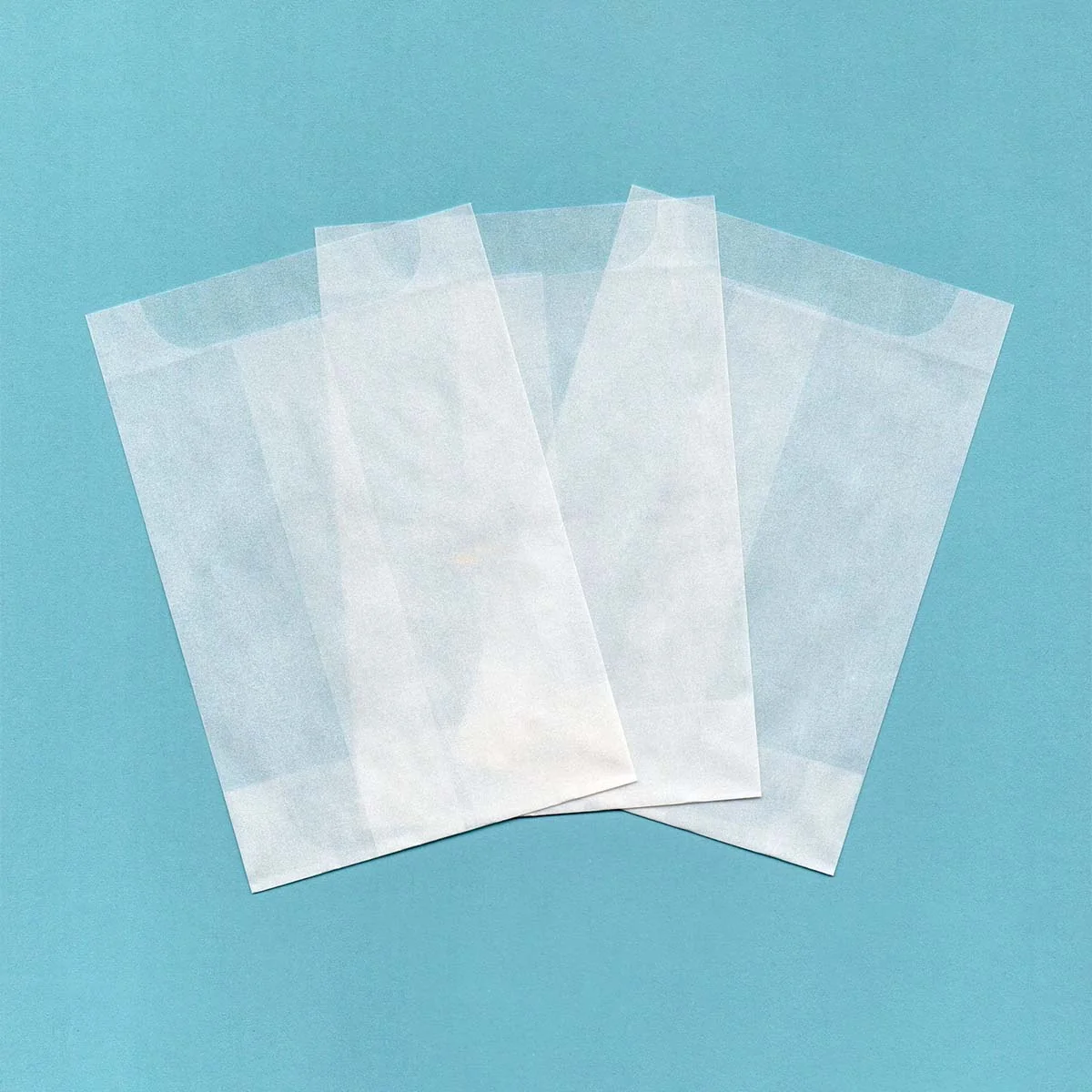

Drag the logo, or select it and use the arrow keys (Shift moves faster, + and − resize).
Related Products
Other packaging that is often ordered alongside glassine paper.
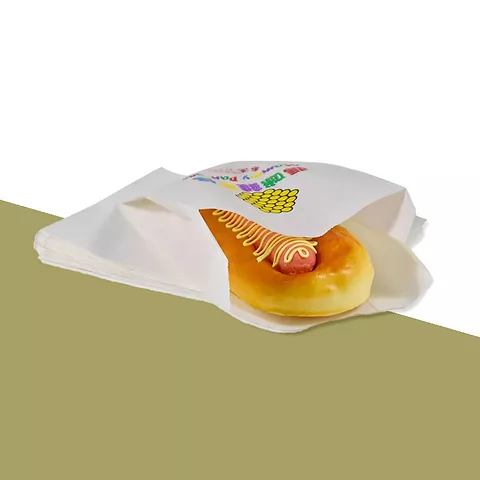
Greaseproof Paper
Custom greaseproof paper is a dense, grease-resistant sheet that holds back butter, oil and sauce long enough for a customer…
Deli Paper
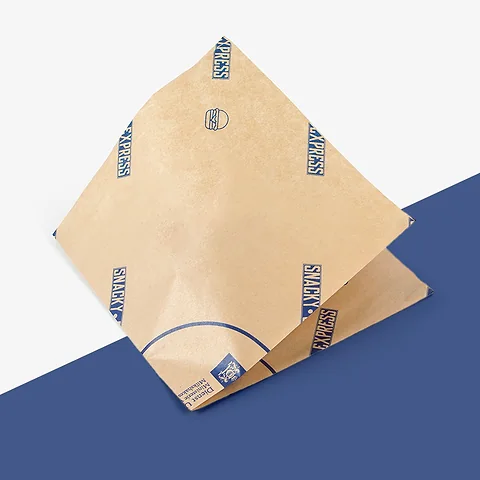
Custom deli paper is the thin, grease-resistant sheet that wraps a sandwich, separates slices of ham and cheese and lines a…
Food Wrapping Paper
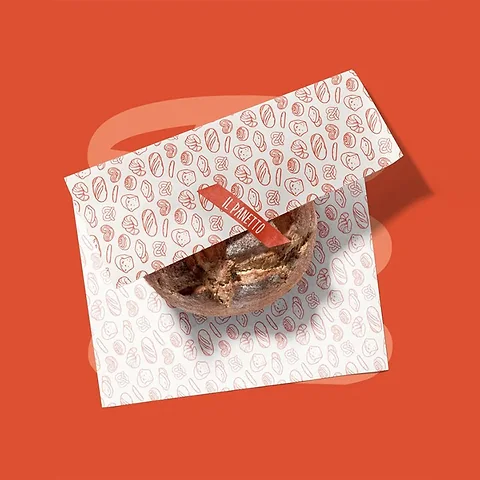
Custom food wrapping paper is the sheet your customer actually touches, so it carries your name further than any box.
Branded Tissue Paper
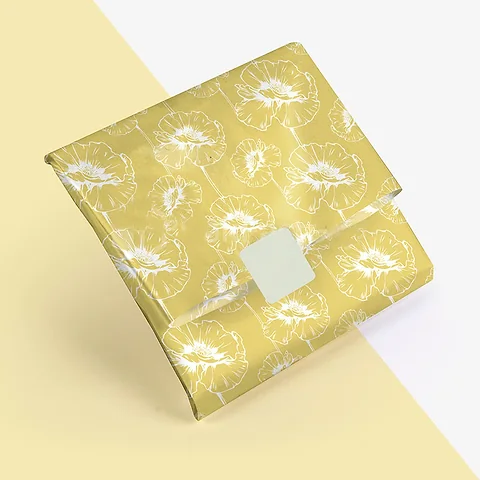
Custom branded tissue paper is the layer a customer touches between opening the box and holding what they bought.
Glassine Paper Questions
What buyers ask before ordering glassine paper.
Is glassine paper the same as greaseproof paper?
They are related but not the same. Glassine is supercalendered to be smooth, dense and translucent, while greaseproof paper is treated for oil resistance and is more opaque. Glassine resists grease well for counter use and has a more delicate look.
Can I wrap buttery croissants in glassine?
Yes, glassine handles buttery pastries well for the time they are sold and carried home. A very oily product left for days may mark it. Food-contact grade paper is available on request.
Why do stamp collectors use glassine envelopes?
The smooth surface does not scratch stamps or stick to gummed backs, and the translucency lets collectors see the stamp without removing it.
Will a full colour design print well on glassine?
Glassine suits simple one or two-colour designs and patterns. Dense full colour designs lose the see-through effect and can look muddy over the product.
What is the difference between flat and gusseted glassine bags?
Flat bags suit flat items like biscuits and stamps. Gusseted bags have folded sides that open out for rounder items such as buns or loose sweets.
Can I use glassine to wrap clothing?
Yes, printed glassine makes a stylish alternative to tissue paper. The garment shows softly through the sheet, giving a frosted look.
Does glassine curl?
It can curl in damp conditions. Store sheets flat in a dry place, and use a dispenser box or a weighted board on the counter.
Is coloured glassine available?
Glassine comes in white and soft coloured shades. Ask about colours when you request your custom quote, and the proof will show the effect.
Can glassine line a chocolate tray?
Cut sheets make neat liners for chocolate and sweet trays, and they stop pieces sticking to the board. We cut them to your tray size.
How quickly can printed glassine arrive?
Production takes 4–7 working days after proof approval. Free tracked UK mainland delivery then takes 2–3 working days.
What if the print repeat is off on my sheets?
Report misprints within 10 days with a photo and we will reprint or refund them.
Get a Price for Your Glassine Paper
Fill in as much as you know. Sizes are in mm (internal sizes for boxes). If you have artwork, attach it; if not, a logo is enough to start the proof.
We reply with a custom quote by email within one working day, then send a free design proof before anything is printed.
- Phone+44 7578 382054
- WhatsAppMessage us
- Emailinfo@shopcustomboxes.co.uk
- HoursMonday to Friday, 9 am to 5.30 pm UK time
- OfficeOffice 704, 85 Dunstall Hill, Wolverhampton, WV6 0SR