 Custom Mailer Boxes
 Custom Shipping Boxes
 Custom Cardboard Boxes
 Custom Kraft Boxes
 Custom Product Boxes
 Custom Retail Boxes
 Custom Tuck End Boxes
 Custom Pillow Boxes
 Custom Window Boxes
 Custom Rigid Boxes
 Custom Gift Boxes
 Custom Magnetic Boxes
 Custom Sleeve Boxes
 Custom Printed Boxes
 Custom Boxes with Logo
 Custom Box Inserts


Custom Candy Bar Boxes
Custom candy bar boxes cover two jobs: slim cartons that wrap a single chocolate or fudge bar, and display cases that hold a row of bars on a counter. Both are printed with your branding and made to the exact length, width and thickness of your bar.
- Design proofFree, approved by you before printing
- PriceCustom quote by email within one working day
- Production4–7 working days after proof approval
- DeliveryFree and tracked, UK mainland, 2–3 working days
- Misprints or damageReported within 10 days, reprinted or refunded
Two Kinds of Candy Bar Boxes
When confectionery makers talk about candy bar boxes they usually mean one of two things. The first is primary packaging: a slim carton or sleeve that the bar sits in, often over a foil or flow wrap. This is what the customer picks up, so it carries the flavour, the ingredients and the brand. The second is a display case: a shallow tray with a tear-away lid or a raised header card that holds a dozen or more wrapped bars upright beside the till.
Many brands order both. The individual carton gives a premium feel and protects the bar, while the display case gets the product onto a retailer's counter without needing shelf space. Designing the two together makes the brand look consistent from a metre away and from a hand's distance.
Some makers skip individual cartons altogether and sell flow-wrapped bars from a printed display case. That approach keeps costs down for lower-priced bars while still giving the product a branded presence at the point of sale. Shops that sell bars by the dozen tend to stock them in a counter display box with a tear-off lid, which is the second format described below.
Single-Bar Cartons and Sleeves
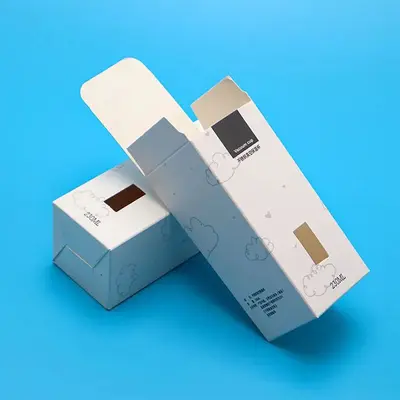
A single-bar carton is usually a tuck-end box or a slide-on sleeve. Tuck-end boxes enclose the bar fully and protect the corners, which matters for thick bars and those with inclusions like nuts or caramel that can break. Sleeves wrap around a foil-wrapped bar and leave the ends visible, which is quicker to pack by hand and lets the foil colour show.
For craft chocolate makers, a folded wrapper style with a tuck flap is popular because it feels like opening a letter. The inside face can carry tasting notes, the bean origin or a short story about the recipe.
Make sure the carton fits the wrapped bar, not the bare bar. Foil adds very little, but a flow wrap with sealed ends can add several millimetres to the length, and a carton sized to the naked bar will not close. Sending a wrapped sample is the easiest way to avoid that mistake.
Thickness matters too. A bar that is too loose in its carton slides around and can snap at a score line, while a tight fit can crack the chocolate when the box is squeezed on a crowded shelf.
- Tuck-end cartons for thick and filled bars
- Slide-on sleeves over foil or flow wrap
- Folded envelope-style wrappers with a tuck closure
- Window cartons that show the surface pattern of the bar
- Tear-strip openings for easy access
Often ordered by
- Craft chocolate makers
- Fudge kitchens
- Protein and snack bar brands
- Wedding and corporate favour makers
- Farm shops
- Cafés
- Fundraising groups
Popular Candy Bar Boxes Sizes
Sizes are in mm. Every order is cut to your size, so any size between these rows is fine.
| Size | Often used for |
|---|---|
| Standard bar carton 160 x 80 x 12 mm | Typical chocolate bars |
| Slim bar sleeve 150 x 70 x 8 mm | Thin craft chocolate bars |
| Snack bar carton 130 x 40 x 20 mm | Protein and cereal bars |
| Thick bar carton 170 x 85 x 20 mm | Filled bars and fudge slabs |
| Counter display case 270 x 180 x 90 mm | A row of wrapped bars at the till |
Not sure of the size? Send the product measurements and we work out the rest.
Styles
- Tuck-end bar carton
- Slide-on sleeve
- Envelope-style wrapper
- Window carton
- Counter display case with tear-off lid
Materials
- White folding board
- Kraft board
- E-flute corrugated for display cases
- Food-contact grade board on request
- Full colour CMYK
- Pantone flavour colours
- Metallic inks
- Inside print
Finishes
- Gloss lamination
- Matt lamination
- Spot gloss UV
- Foil stamping
- Embossing
Extras
- Tear strips
- Perforated display headers
- Case dividers
- Front lips
- Window panels
See the board and finish guide for what each option looks like.
Production and Delivery
Production takes 4–7 working days after you approve the free design proof. Delivery to the UK mainland is free and tracked, and arrives in 2–3 working days once the order leaves production. The tracking link comes to you by email.
Reprints and Refunds
Check the order when it arrives. If anything is misprinted or damaged, report it within 10 days with a photo and we reprint or refund the items affected. Read the full returns and reprints policy.
Need it by a date?
Tell us the date with your sizes and we plan the proof and production around it.
Candy Bar Boxes Specification
| Style | Tuck-end bar carton, Slide-on sleeve, Envelope-style wrapper, Window carton, Counter display case with tear-off lid |
|---|---|
| Material | White folding board, Kraft board, E-flute corrugated for display cases, Food-contact grade board on request |
| Full colour CMYK, Pantone flavour colours, Metallic inks, Inside print | |
| Finish | Gloss lamination, Matt lamination, Spot gloss UV, Foil stamping, Embossing |
| Extras | Tear strips, Perforated display headers, Case dividers, Front lips, Window panels |
| Size | Made to your size in mm |
| Minimum order | Low, quoted per job |
| Price | From £0.25 a box; custom quote by email within one working day |
| Proof | Free design proof before printing |
| Production | 4–7 working days after proof approval |
| Delivery | Free tracked UK mainland delivery, 2–3 working days |
Counter Display Cases
Display cases sit next to a till, on a café counter or on a market stall. They ship as a closed carton, then the lid tears along a perforation and folds back to form a header that carries your logo. The bars stand in a row, ready to be picked up on impulse.
The case needs to be sized for the bar count and orientation. Bars standing upright show their tops; bars lying at an angle show their full front panel. We can add a low front lip so bars cannot slide out, and a divider down the middle for two flavours in one case.
Printing the inside of the case and the header card makes the display look finished from every angle. Retailers are more likely to give counter space to a display that looks tidy and is easy to refill. The display case uses the same board and tear line as our shelf-ready retail display boxes, scaled to a bar's footprint.
Board and Food Contact
Most candy bar cartons use white folding board, which takes sharp, bright print and keeps its shape. Kraft board gives an artisan look that suits small-batch chocolate and fudge. For display cases, a slightly heavier board or E-flute corrugated keeps the case rigid once loaded with bars.
If the bar sits directly in the carton without a wrapper, food-contact grade board is available on request. Most makers use a foil or film inner wrap, which protects the chocolate from moisture and odours and keeps the carton clean.
Display cases that travel inside an outer shipper to retailers can use lighter board than cases sent loose, so tell us how the cases will be delivered to stockists. Where the bar sits unwrapped against the board, the food-side coating described in the board types guide is the one to ask for.
Designing Custom Candy Bar Boxes That Sell
Confectionery is bought quickly, so the front panel needs to say what the bar is in a glance: brand, flavour and one standout detail. Colour coding by flavour helps a lot. A row of bars in a display case with a different colour for each flavour is easy to scan and looks attractive.
The back panel carries ingredients, allergen information, weight and barcode. Keep allergen text in a clear, readable size, because shoppers with allergies check it carefully. Leave space for a best before date if you stamp or label it after packing.
Finishes like gloss lamination, metallic inks or a spot gloss on the flavour name help bars catch the eye under shop lighting. A matt finish with a single foil detail suits premium dark chocolate.
If you sell a range of flavours, design one master layout and change only the colour, flavour name and ingredient panel for each. That keeps setup simple, makes reorders quicker and ensures every bar in a retailer's display looks part of the same family. If the bar is windowed, the sweet boxes with clear windows show how a small aperture changes the front panel layout.
Who Orders Bar Packaging
Craft chocolate makers, fudge kitchens, protein bar and snack bar brands, confectioners making personalised bars for weddings and corporate events, farm shops with their own chocolate lines and cafés selling house-made bars all use this style of packaging.
Fundraising groups and schools also order printed bar wrappers and display cases for charity sales, where a bright case on a reception desk helps bars sell steadily.
Hotels and holiday lets use small branded bars as turndown or welcome treats, and gyms and leisure clubs stock protein bars in printed display cases at reception, where a neat branded case looks far better than a loose pile of bars in a basket. Wedding and party bars in small numbers are often paired with birthday sweet boxes for favours printed in the same colours.
Measure the Bar Wrapped, Then Decide Sleeve or Carton
Measure the bar in its foil or flow wrap, not bare, because the wrap adds a couple of millimetres and a folded end. If the bar is under 15 mm thick, a sleeve that slides over the wrapped bar is the cheaper option and shows the bar's shape. Thicker bars, or bars sold in sets, need a full carton with tuck ends to stop the chocolate flexing. Decide this before sending artwork, since a sleeve has two printed faces and a carton has six.
Send the wrapped dimensions, the format, the number of flavours and quantities for cartons and display cases together. We email a quote within one working day and prepare a free proof showing the bar outline on the sleeve or carton. Production takes 4 to 7 working days after approval, with tracked delivery to UK mainland addresses included; faults reported within 10 days are reprinted or refunded. Bars sold alongside loose sweets often share the counter with printed sweet boxes in the same colour set.
Design Your Candy Bar Box
Choose the candy bar boxes photo closest to what you have in mind, add your logo, drag it into place and set the size. Send it with your sizes and we reply with a custom quote and a free design proof.

Drag the logo, or select it and use the arrow keys (Shift moves faster, + and − resize).
Related Products
Other packaging that is often ordered alongside candy bar boxes.
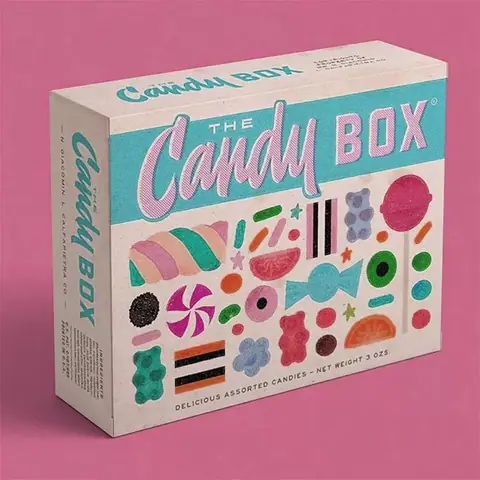
Custom Sweet Boxes
Custom sweet boxes turn a scoop of pick and mix or a handful of handmade fudge into something people are happy to carry out of…

Sweet Boxes with Window
Custom sweet boxes with window panels let colourful sweets do the selling, because a shopper can see the jelly beans, fizzy…

Birthday Sweet Boxes
Custom birthday sweet boxes turn a handful of sweets into a party favour or gift that carries the guest of honour's name, age…
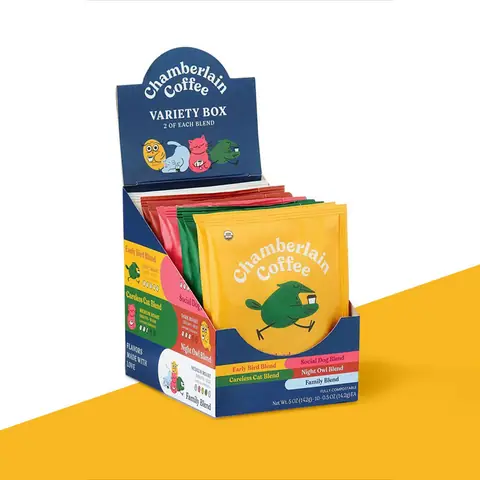
Counter Display Boxes
Custom counter display boxes are open-front cartons that sit beside the till, holding a row of snacks, lip balms, keyrings or…
Candy Bar Boxes Questions
What buyers ask before ordering candy bar boxes.
Should I use a sleeve or a full carton for my bar?
A sleeve is quicker to pack and shows the foil wrap at each end. A full tuck-end carton protects the corners better, which suits thick bars and bars with nuts or caramel.
Can the display case hold two flavours?
Yes, we can add a divider down the middle so two flavours sit side by side. Colour coding each half makes the display easy to read.
How does the display case open?
The lid tears along a perforation and folds back to form a printed header. The case arrives closed for transit and becomes a counter display in seconds.
Can the chocolate sit directly against the board?
Food-contact grade board is available on request. Most makers use a foil or film inner wrap, which also protects the chocolate from moisture and odours.
Where does the allergen statement go on a bar sleeve?
On the back face of a sleeve, or the back panel of a carton, in text no smaller than the ingredient list. Keep it away from the glue seam and the tuck flaps so nothing is hidden when the box is closed. We check the point size on the proof and flag it if it falls below what a shopper can read without picking the bar up.
Can I print tasting notes inside the wrapper?
Yes, inside printing is popular with craft chocolate makers. It is a good place for origin details, tasting notes or a short story about the bar.
Can you make personalised bar wrappers for a wedding?
We can print names, dates or messages on each sleeve, including variable names within one order. Send a list and we show examples on the proof.
Which finish suits premium dark chocolate?
A matt or soft-touch lamination with a single foil detail looks refined. Gloss and metallic inks suit brighter, more playful brands.
Can I add a window to show the bar pattern?
Yes, a small window with a clear film panel shows the moulded surface of the bar. It works well for bars with decorative patterns or toppings.
What is the starting price for printed bar cartons?
Printed bar cartons start from £0.25 each, depending on size, board and quantity. You receive a custom quote by email within one working day.
Can I order cartons and display cases together?
Yes, and it is a good idea because the artwork is proofed together and colours match across both items.
Get a Price for Your Candy Bar Boxes
Fill in as much as you know. Sizes are in mm (internal sizes for boxes). If you have artwork, attach it; if not, a logo is enough to start the proof.
We reply with a custom quote by email within one working day, then send a free design proof before anything is printed.
- Phone+44 7578 382054
- WhatsAppMessage us
- Emailinfo@shopcustomboxes.co.uk
- HoursMonday to Friday, 9 am to 5.30 pm UK time
- OfficeOffice 704, 85 Dunstall Hill, Wolverhampton, WV6 0SR