 Custom Mailer Boxes
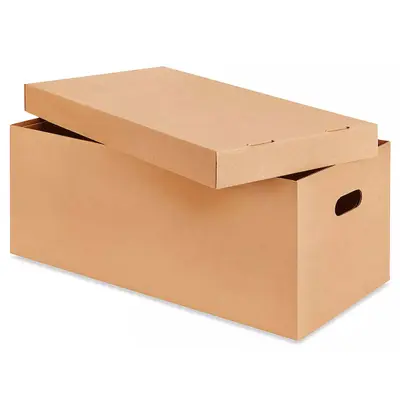 Custom Shipping Boxes
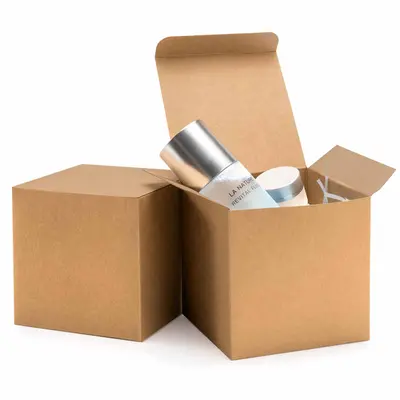 Custom Cardboard Boxes
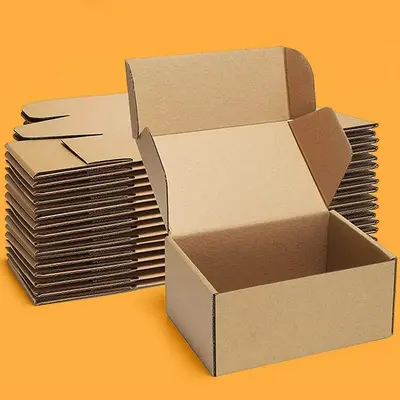 Custom Kraft Boxes
 Custom Product Boxes
 Custom Retail Boxes
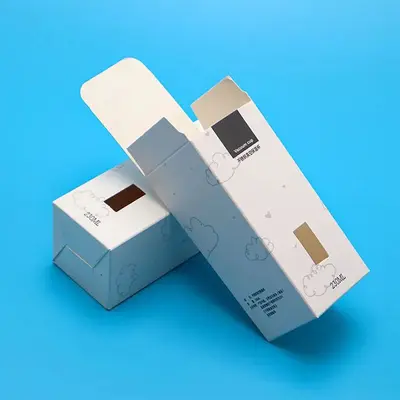 Custom Tuck End Boxes
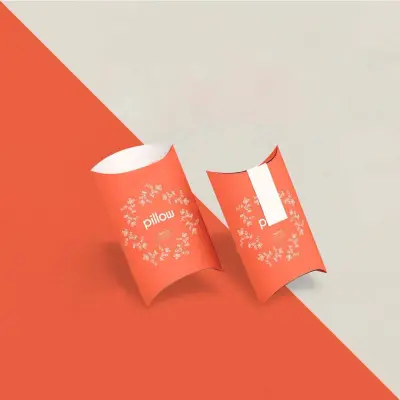 Custom Pillow Boxes
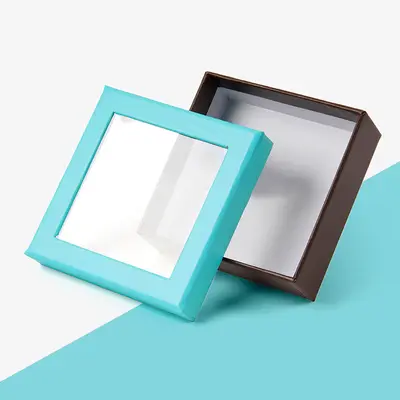 Custom Window Boxes
 Custom Rigid Boxes
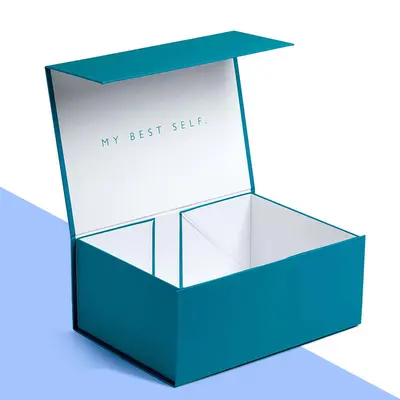 Custom Gift Boxes
 Custom Magnetic Boxes
 Custom Sleeve Boxes
 Custom Printed Boxes
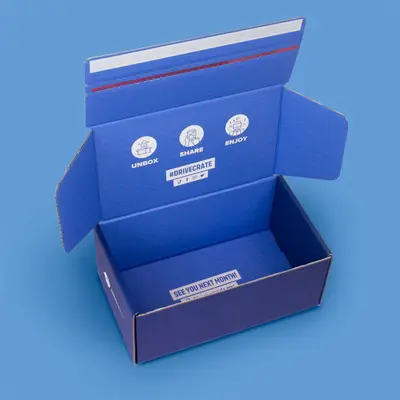 Custom Boxes with Logo
 Custom Box Inserts
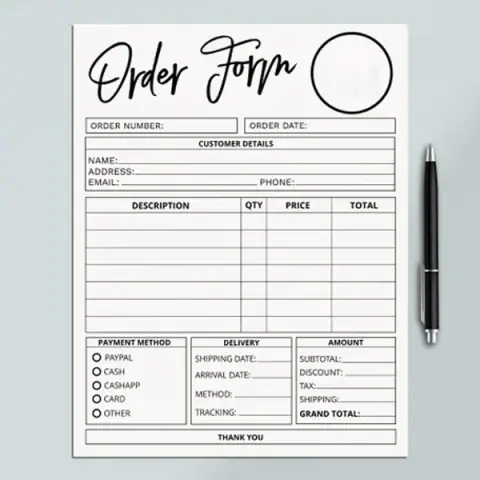


Custom Order Forms
Custom order forms give a small business a clear, consistent way to take orders by hand, whether that is a phone order at a takeaway, a trade sale at a counter or a pre-order at an event stall. We print them as tear-off pads, numbered carbonless books or loose sheets, laid out around the way you actually work.
- Design proofFree, approved by you before printing
- PriceCustom quote by email within one working day
- Production4–7 working days after proof approval
- DeliveryFree and tracked, UK mainland, 2–3 working days
- Misprints or damageReported within 10 days, reprinted or refunded
Why Paper Order Forms Still Matter
Plenty of orders never touch a screen. A caller rings a takeaway at the busiest moment of a Friday night, a joiner walks up to a timber merchant's counter with a list, a baker takes cake orders at a farmers' market with no signal. In each case, a printed form with the right boxes in the right order makes sure nothing is forgotten: the name, the phone number, the items, the collection time and whether it has been paid.
A good form also speeds things up. Staff stop writing notes on the back of receipts, the kitchen or warehouse can read what was taken, and there is a record if a customer queries the order later. Even businesses that use tablets for most orders keep a pad of forms for power cuts, outdoor events and the moments when the card reader decides not to cooperate.
Printed forms also look professional to the customer. A branded form, filled in neatly and handed over as a copy, reassures them that their order has been taken seriously and gives them your contact details in case anything changes. Invoices and job sheets for the same business are printed as business forms for the office.
Formats: Pads, Books and Sheets
The format depends on if a copy is needed and how the form is used. A simple tear-off pad suits a kitchen ticket or a market pre-order where one copy is enough. A carbonless book creates a duplicate or triplicate as you write, so the customer keeps one copy, the kitchen or warehouse gets another and the book keeps a record.
Loose sheets suit businesses that print forms for a mail-in order or keep them in a folder at the counter. They can be hole-punched for ring binders or supplied with a perforated tear-off slip at the bottom for the customer.
If you are unsure, start with a pad. It is the quickest format to use and the cheapest to reorder, and you can move to a carbonless book once you know copies are genuinely needed. Drivers taking orders at the door usually carry our carbonless books for vans.
- Glued tear-off pads with a card back
- Carbonless books in duplicate or triplicate, sequentially numbered
- Loose single sheets, plain or hole-punched
- Forms with a perforated customer receipt slip
Often ordered by
- Takeaways and cafés
- Bakeries and cake makers
- Trade counters and merchants
- Market traders
- Event caterers
- Wholesalers selling to shops
- Florists
Popular Order Forms Sizes
Sizes are in mm. Every order is cut to your size, so any size between these rows is fine.
| Size | Often used for |
|---|---|
| Kitchen ticket pad A6 105 x 148 mm | Takeaway and café orders |
| Standard order form A5 148 x 210 mm | Counter, phone and market orders |
| Trade order form A4 210 x 297 mm | Product lists and delivery details |
| DL slip form 99 x 210 mm | Pre-orders with a customer tear-off |
| Duplicate book A5 148 x 210 mm, two-part | Customer and business copies |
Not sure of the size? Send the product measurements and we work out the rest.
Styles
- Tear-off pad
- Carbonless duplicate book
- Carbonless triplicate book
- Loose sheets
- Forms with receipt slip
Materials
- Uncoated bond paper
- Carbonless paper sets
- Card backing board
- One colour
- Two colour
- Full colour
- Sequential numbering
Finishes
- Glued pad head
- Wrap-around book cover
- Perforation
- Hole punching
Extras
- Writing shield
- Numbering
- Perforated tear-off slip
- Coloured copy sheets
Not sure which material or finish suits? Tell us how the form will be used and we suggest one in your custom quote.
Production and Delivery
Production takes 4–7 working days after you approve the free design proof. Delivery to the UK mainland is free and tracked, and arrives in 2–3 working days once the order leaves production. The tracking link comes to you by email.
Reprints and Refunds
Check the order when it arrives. If anything is misprinted or damaged, report it within 10 days with a photo and we reprint or refund the items affected. Read the full returns and reprints policy.
Need it by a date?
Tell us the date with your sizes and we plan the proof and production around it.
Order Forms Specification
| Style | Tear-off pad, Carbonless duplicate book, Carbonless triplicate book, Loose sheets, Forms with receipt slip |
|---|---|
| Material | Uncoated bond paper, Carbonless paper sets, Card backing board |
| One colour, Two colour, Full colour, Sequential numbering | |
| Finish | Glued pad head, Wrap-around book cover, Perforation, Hole punching |
| Extras | Writing shield, Numbering, Perforated tear-off slip, Coloured copy sheets |
| Size | Made to your size in mm |
| Minimum order | Low, quoted per job |
| Price | From £0.25 a form; custom quote by email within one working day |
| Proof | Free design proof before printing |
| Production | 4–7 working days after proof approval |
| Delivery | Free tracked UK mainland delivery, 2–3 working days |
Laying Out Custom Order Forms That Staff Will Use
Start by watching how orders are taken now. Note what staff ask, in what order, and what gets forgotten. The form should follow that sequence: customer details at the top, then items and quantities, then delivery or collection, then payment and any notes. A form that matches the natural flow of a conversation gets filled in properly; one that jumps around gets ignored.
Give people room to write. Handwriting is larger than typed text, and cramped boxes lead to guesswork. If you sell a fixed menu or product list, pre-print the items with a quantity column and tick boxes, which is faster and clearer than writing each item out. Leave a generous notes space for allergies, special requests or site directions.
Number the forms if you need to track them. Sequential numbering on carbonless books helps match orders to payments and spot missing tickets at the end of a shift. A copy for the customer and one for the kitchen comes from carbonless forms that copy.
Sizes and Paper
A5 is the most common order form size. It fits a clipboard, sits neatly beside a till and gives enough space for a dozen or so lines. A4 works for trade forms with long product lists or multiple delivery addresses. Small A6 pads suit kitchen tickets and quick market orders where only a few items are noted down.
For single-copy pads, a smooth uncoated paper takes biro, pencil and felt tip without smudging. Carbonless sets use specially coated papers in white, then yellow, pink or blue for the copies, so each part is easy to identify.
Think about where the form will be filled in. A clipboard at a market stall in drizzle calls for a slightly heavier paper that will not cockle, while a pad that lives beside a fryer benefits from a stiff card back so it can be propped up and used without a desk. The gsm figures are explained in our paper weights explained guide.
Branding and Print
Most order forms are printed in one or two colours. Your logo and contact details go at the top, with lines and boxes in a lighter tint so handwriting is easy to read. Full colour is available if you want to include product photos on a mail-in form, but on a working pad simple is usually better.
Add the details customers need on their copy: your phone number, opening hours, website and, for trade forms, your terms or a short line about payment. On the kitchen or warehouse copy, extra space for a time stamp or packer's initials can help with busy shifts.
If the form will be handed out at events for people to fill in later, a clear return address or instructions on how to send it back makes a big difference to the number that come back. Many businesses match the header to their letterheads in matching colours.
Ideas From Different Trades
Takeaways often use small pads with the menu pre-printed in sections, so the person on the phone simply writes a number beside each dish. Bakeries taking celebration cake orders prefer an A5 form with space for the message, flavour, size, collection date and a sketch box. Trade counters favour triplicate books so the customer, the yard and the office each have a copy.
Event caterers and market traders like pre-order forms with a tear-off slip that the customer keeps as a reminder of what they ordered and when to collect. Wholesalers selling to shops sometimes print a full product list on an A4 sheet so retailers can tick quantities and send it back by post or as a photo. Jobs that need three copies use our three part carbonless sets.
Fill In Your Draft Form With a Real Order
The quickest way to a good order form is to take a real order on a rough draft. Sketch the fields you think you need, write out yesterday's biggest order on it by hand, and see which boxes ran out of room and which stayed empty; that draft, photographed and sent to us, is a better brief than a blank layout. Then choose the format: a pad for a counter, a carbonless book for a van or a market, loose sheets for an office printer. Tell us the size, usually A5 for a takeaway and A4 for trade, the number of parts, and whether the forms need numbering. Artwork is your logo as a vector file and the field list as plain text, and we set the layout and send a free proof. A custom quote comes by email within one working day, minimums are low and quoted per job, and forms are printed in four to seven working days after approval with free tracked delivery to UK mainland addresses. Counter staff who need a single copy use our carbonless pads for the counter.
Design Your Order Form
Choose the order forms photo closest to what you have in mind, add your logo, drag it into place and set the size. Send it with your sizes and we reply with a custom quote and a free design proof.

Drag the logo, or select it and use the arrow keys (Shift moves faster, + and − resize).
Related Products
Other packaging that is often ordered alongside order forms.

Carbonless Forms
Custom carbonless forms, often called NCR forms, give you an instant copy of everything you put on the top sheet without…
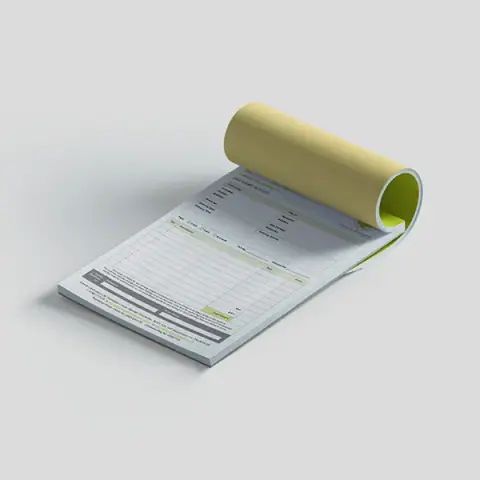
Carbonless Books
Custom carbonless books bind numbered NCR sets into a cover, so the top copy tears out for the customer while the duplicate…
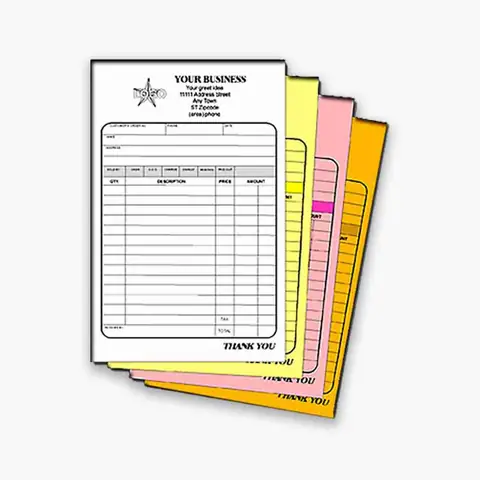
Multi-Part Carbonless Forms
Custom multi-part carbonless forms give you one handwritten entry and two, three or four matching copies, each on its own…
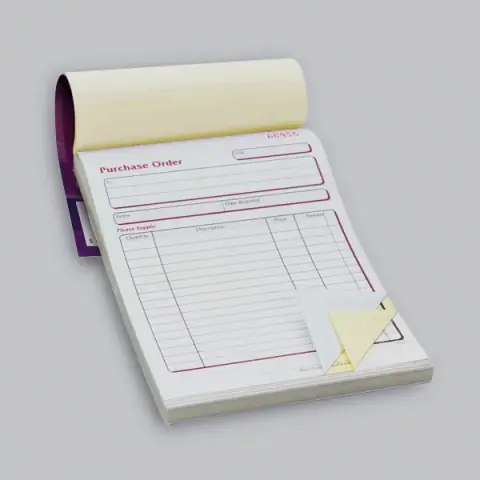
Carbonless Pads
Custom carbonless pads are glued blocks of NCR sets that make an instant handwritten copy, so the customer keeps one page and…
Order Forms Questions
What buyers ask before ordering order forms.
Can you copy my existing order form?
Yes. Send a photo or scan and we will reset it neatly with your branding, improving spacing where it helps. You will see it all on a free proof first.
What is the difference between a pad and a carbonless book?
A pad gives one copy per sheet that you tear off. A carbonless book makes two or three copies at once as you write, so the customer and your team each keep one.
Can the forms be numbered?
Yes. Sequential numbering is available on books, pads and sheets, which helps match orders to payments and spot missing tickets.
What size suits a takeaway?
A6 pads are popular for kitchen tickets. If you pre-print the menu with quantity columns, an A5 form gives a bit more room.
Can I pre-print my product list?
Yes. Pre-printed items with quantity boxes make orders quicker to take and easier to read, and they cut down on spelling mistakes.
Which colours are the carbonless copies?
The top sheet is white, with copies usually in yellow, pink or blue so each part is easy to identify. Tell us which colour goes to whom.
Can a cake order form include a sketch box?
It can. Bakers often like a blank box for a quick drawing of the design, alongside fields for flavour, size, message and collection date.
Can I order forms with my menu on the back?
Yes, double-sided printing is available, and putting your menu or price list on the back saves handing out a separate leaflet. The back can be updated on a reorder without changing the form. We show both sides on the proof.
How much do order forms cost?
Simple single sheets start from £0.25 each, with pads and books priced per job. You receive a custom quote by email within one working day.
How many sheets are in each pad?
Pads and books can be made up with different sheet counts. Tell us how many orders you take in a typical week and we will suggest a sensible size.
Can I get forms in a hurry for a market day?
Production takes four to seven working days after proof approval, plus two to three working days for free tracked UK mainland delivery. Tell us the date and we will help plan the proof stage.
Get a Price for Your Order Forms
Fill in as much as you know. Sizes are in mm (internal sizes for boxes). If you have artwork, attach it; if not, a logo is enough to start the proof.
We reply with a custom quote by email within one working day, then send a free design proof before anything is printed.
- Phone+44 7578 382054
- WhatsAppMessage us
- Emailinfo@shopcustomboxes.co.uk
- HoursMonday to Friday, 9 am to 5.30 pm UK time
- OfficeOffice 704, 85 Dunstall Hill, Wolverhampton, WV6 0SR