 Custom Mailer Boxes
 Custom Shipping Boxes
 Custom Cardboard Boxes
 Custom Kraft Boxes
 Custom Product Boxes
 Custom Retail Boxes
 Custom Tuck End Boxes
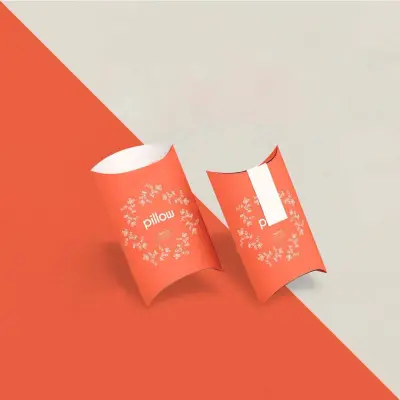 Custom Pillow Boxes
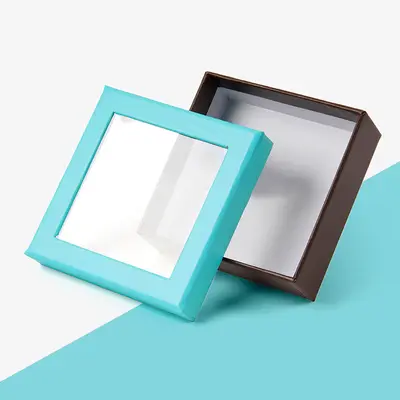 Custom Window Boxes
 Custom Rigid Boxes
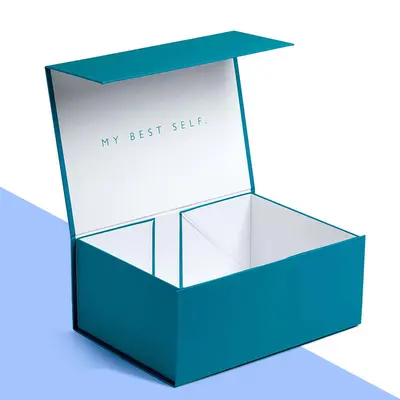 Custom Gift Boxes
 Custom Magnetic Boxes
 Custom Sleeve Boxes
 Custom Printed Boxes
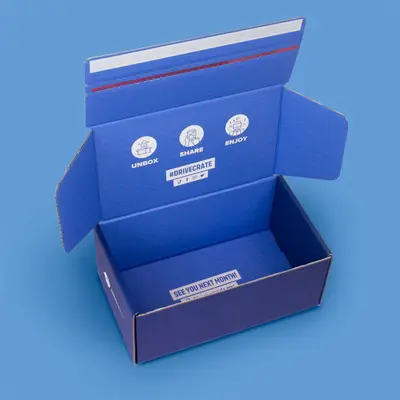 Custom Boxes with Logo
 Custom Box Inserts


Custom Branded Product Trays
Branded product trays are open-topped printed trays that hold a row or a block of your products on a shelf, a counter or a pallet, so shoppers can see and take them without any unpacking. They are one of the simplest ways for a new range to look organised and owned in a store.
- Design proofFree, approved by you before printing
- PriceCustom quote by email within one working day
- Production4–7 working days after proof approval
- DeliveryFree and tracked, UK mainland, 2–3 working days
- Misprints or damageReported within 10 days, reprinted or refunded
Shelf Presence Without a Full Display Unit
A freestanding display stand takes floor space that many retailers will not give a new brand. A tray asks for much less, and a counter display box less still. It sits on an existing shelf, holds your products together in a tidy block and puts your logo along the front edge where shoppers look first. When stock runs low, the tray still frames what is left, so the facing never looks abandoned.
Trays also make life easier behind the scenes. Staff can lift a full tray from a delivery carton straight onto the shelf, which is exactly what store teams prefer. Many buyers now ask suppliers for packaging that goes shelf-ready in this way, so having a branded tray can help a listing conversation as much as it helps the look on the shelf.
Tray Shapes and Front Profiles
The basic tray is a base with four low walls, but the front wall is where the design choices sit. A low front lets shoppers see the whole product pack, while a cut-out front tray keeps taller sides for strength. A taller front with a curved or angled cut-out gives more room for branding while still showing the product tops. A raised header card at the back adds a message panel without needing a separate sign.
Think about how shoppers take a product out. If they need to lift a jar up and over a high wall, the tray slows them down and they may leave it. If the front is low or cut away, the hand goes straight in. That small difference can affect how quickly a new line sells through.
- Straight four-wall trays for stacking cartons or jars
- Cut-out front trays with a curved or angled dip
- Trays with a back header card for a promotion or brand line
- Divided trays with card partitions to keep variants apart
- Tray and lid sets that ship closed and open into a display
Often ordered by
- Food and drink producers
- Health and beauty brands
- Farm shops and delis
- Wholesalers supplying convenience stores
- Pharmacy product brands
- Gift shops
Popular Branded Product Trays Sizes
Sizes are in mm. Every order is cut to your size, so any size between these rows is fine.
| Size | Often used for |
|---|---|
| Sachet tray 160 x 110 x 40 mm | Sachets, tea envelopes and small bars |
| Snack bar tray 220 x 130 x 50 mm | Rows of wrapped bars |
| Jar tray 250 x 170 x 60 mm | Six jars of preserves or sauces |
| Bottle tray 300 x 200 x 80 mm | Bottled drinks or oils |
| Large shelf tray 380 x 280 x 90 mm | Boxed products on deep shelves |
Not sure of the size? Send the product measurements and we work out the rest.
Styles
- Four-wall open tray
- Cut-out front tray
- Tray with header card
- Divided tray
- Tray with lid
Materials
- Folding boxboard
- E-flute corrugated
- B-flute corrugated
- Kraft board
- Food-contact grade board on request
- Full colour CMYK
- Pantone spot colours
- One or two colour on kraft
- Inside print
Finishes
- Matt lamination
- Gloss lamination
- Water-resistant coating
- Spot UV
Extras
- Card dividers
- Tear-away perforated fronts
- Shelf wobblers
- Outer shipping cartons
See the board and finish guide for what each option looks like.
Production and Delivery
Production takes 4–7 working days after you approve the free design proof. Delivery to the UK mainland is free and tracked, and arrives in 2–3 working days once the order leaves production. The tracking link comes to you by email.
Reprints and Refunds
Check the order when it arrives. If anything is misprinted or damaged, report it within 10 days with a photo and we reprint or refund the items affected. Read the full returns and reprints policy.
Need it by a date?
Tell us the date with your sizes and we plan the proof and production around it.
Branded Product Trays Specification
| Style | Four-wall open tray, Cut-out front tray, Tray with header card, Divided tray, Tray with lid |
|---|---|
| Material | Folding boxboard, E-flute corrugated, B-flute corrugated, Kraft board, Food-contact grade board on request |
| Full colour CMYK, Pantone spot colours, One or two colour on kraft, Inside print | |
| Finish | Matt lamination, Gloss lamination, Water-resistant coating, Spot UV |
| Extras | Card dividers, Tear-away perforated fronts, Shelf wobblers, Outer shipping cartons |
| Size | Made to your size in mm |
| Minimum order | Low, quoted per job |
| Price | From £0.25 a tray; custom quote by email within one working day |
| Proof | Free design proof before printing |
| Production | 4–7 working days after proof approval |
| Delivery | Free tracked UK mainland delivery, 2–3 working days |
How to Size a Product Tray
Work from the shelf backwards. Measure the shelf depth and the height between shelves, then decide how many products wide and deep the tray should hold. Multiply your product dimensions by those numbers and add a few millimetres of clearance on each side so packs slide in and out easily. Wall height is usually between a quarter and a third of the product height; much taller and the product hides, much lower and it tips.
If your trays go into an outer shipping carton, the tray footprint should fit that carton neatly too. We can check both dimensions together and suggest a layout, so a delivery case opens to reveal ready-filled trays.
A quick test helps: tape a mock tray from spare card to your exact sizes and stand your products in it on a real shelf before you approve the proof.
Card or Corrugated?
Light products such as sachets, bars and small cartons sit happily in a folding board tray. It prints crisply and folds flat for storage; see our board and card types explained for the difference between boxboard and flute. Heavier products like jars, bottles and cans need corrugated board, which keeps the base flat and the walls upright even when the tray is fully loaded and lifted from one side. E-flute keeps the walls slim and smooth for print, while B-flute adds more strength for heavy glass.
Trays used in chilled cabinets or on market stalls benefit from a water-resistant coating on the outside. Food-contact grade board is available on request if loose produce or unwrapped baked goods will sit directly on the tray.
Designing the Print for a Tray
A tray is seen from the front and slightly above, so the front lip and the top edge of the side walls carry the brand. Keep the logo large and simple on the front, with one short line about the range. The inside walls and base are mostly hidden once the tray is full, but they show as stock sells, so a pattern or a colour there keeps the tray looking smart as it empties.
Full colour printing works on white board or white-lined corrugated. Kraft board with one or two spot colours gives a natural, craft look that suits farm shops and delis. Matt lamination cuts glare under shop lighting, which helps a printed message read clearly from a distance.
Remember that trays are often photographed by store teams and buyers for planograms. A clean front panel with your brand name in large type makes the range easy to identify in those photos and in head office reports.
Keeping Trays Upright When Fully Loaded
The most common complaint about cheap trays is that they sag. A long tray holding a row of heavy bottles bends in the middle when picked up, the walls splay outwards and the products lean, which is where a PDQ tray with a reinforced base earns its keep. Three details prevent that. A double-thickness front wall, folded back on itself, keeps the front edge stiff. Glued corners rather than tab-locked ones stop the walls spreading. And a base that wraps up into the walls, instead of a separate panel, spreads the load across the whole tray.
For very long trays we may suggest a centre divider. It does more than separate products: it acts as a spine and stops the tray folding when lifted from both ends. These details add very little to the unit cost but make a big difference to how the tray behaves on a busy shelf, where staff and shoppers handle it far more roughly than you might expect.
Ask the Buyer for the Shelf Depth Before You Send Artwork
Trays fail on the shelf more often than in the post, usually over a number nobody asked for. Before you brief artwork, ask the store or wholesaler for the shelf depth, the maximum tray height they accept and whether they want a perforated front that tears away or the barcode on a particular side. Then count the units per row and the rows deep, and weigh a full row, because glass jars need corrugated board where sachets sit happily in folding boxboard. Two tray sizes printed from the same artwork usually cover stores with different shelf depths.
Send the product sizes, units per tray and quantity along with any retailer guidance, and a custom quote arrives by email within one working day with low minimums quoted per job, which helps while a new listing is being tested. A free design proof shows the tray flat with the front profile and any perforation marked. Production takes 4 to 7 working days after approval and free tracked delivery reaches UK mainland addresses in 2 to 3 working days. Where a tray is not enough on its own, a product display box with a header can be printed to match.
Design Your Branded Product Tray
Choose the branded product trays photo closest to what you have in mind, add your logo, drag it into place and set the size. Send it with your sizes and we reply with a custom quote and a free design proof.


Drag the logo, or select it and use the arrow keys (Shift moves faster, + and − resize).
Related Products
Other packaging that is often ordered alongside branded product trays.

Product Display Boxes
Custom product display boxes let a shop put your whole range out in one tidy, printed unit instead of scattering it across…
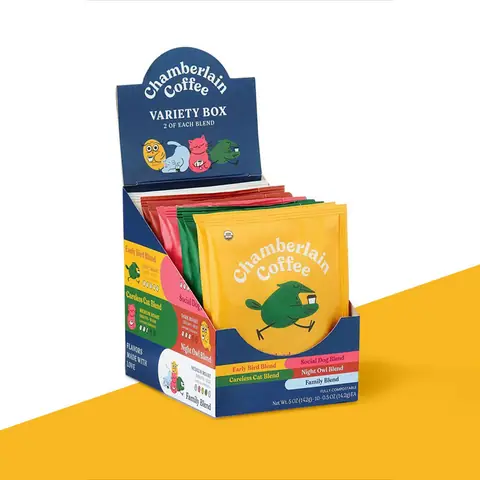
Counter Display Boxes
Custom counter display boxes are open-front cartons that sit beside the till, holding a row of snacks, lip balms, keyrings or…

PDQ Display Trays
Custom PDQ display trays are shelf-ready cases that arrive at a store full of product and convert into a printed display tray…

Cut-Out Front Display Trays
Cut-out front display trays are shelf and counter trays with a lowered front edge, so shoppers can see the products and lift…
Branded Product Trays Questions
What buyers ask before ordering branded product trays.
How many products should a branded tray hold?
It depends on the shelf and how fast the product sells. A tray that empties within a few days is a good target, because a half-full tray left for weeks looks tired. Most trays hold between a single row and a block of a few rows.
Can the tray front tear away?
Yes. We can add a perforated strip so the front wall tears off once the tray is on the shelf, giving shoppers easier access. It is useful when the tray doubles as part of the shipping pack.
Which board should I choose for glass jars?
Glass jars need corrugated board, usually B-flute for heavier loads. It keeps the base flat when the tray is lifted. Folding boxboard is better kept for light, flat packs.
Can I print the inside of the tray?
Yes. Printing the inside walls and base keeps the tray looking branded as stock sells down. It is quoted as an option alongside the outside print.
Will my tray fit inside a shipping carton?
If you tell us the carton size, we design the tray footprint to fit it. That way the delivery case opens to show ready-filled trays. We can also quote the outer carton.
Can trays have dividers between variants?
Card partitions can split a tray into lanes for different flavours or shades. They slot in and keep variants from mixing when shoppers pick from the tray.
Do product trays arrive flat?
Folding board trays usually arrive flat and fold up with lock tabs. Some corrugated trays come pre-glued at the corners so they pop open ready to fill. We will tell you which style you are getting on the proof.
What wall height works best?
Around a quarter to a third of the product height usually works. Lower walls show more of the product, while a cut-out front lets you keep taller side walls for strength.
Can I add a header card for a promotion?
A back header card can be part of the tray or a separate card that slots in. Separate cards let you swap a promotion message without reprinting the whole tray.
How quickly can trays be ready for a new store listing?
Once you approve the proof, production takes 4–7 working days and free tracked UK mainland delivery takes 2–3 working days. Send product sizes early so the proof is ready as soon as the listing is confirmed.
What if a tray arrives with a cracked crease or a scuffed front?
Report any damage or misprint within 10 days with photos and we reprint or refund the affected trays. Check the front walls in particular, since that is the face the shopper sees. Trays are shipped flat or nested in outer cartons to keep creases clean in transit.
Get a Price for Your Branded Product Trays
Fill in as much as you know. Sizes are in mm (internal sizes for boxes). If you have artwork, attach it; if not, a logo is enough to start the proof.
We reply with a custom quote by email within one working day, then send a free design proof before anything is printed.
- Phone+44 7578 382054
- WhatsAppMessage us
- Emailinfo@shopcustomboxes.co.uk
- HoursMonday to Friday, 9 am to 5.30 pm UK time
- OfficeOffice 704, 85 Dunstall Hill, Wolverhampton, WV6 0SR