 Custom Mailer Boxes
 Custom Shipping Boxes
 Custom Cardboard Boxes
 Custom Kraft Boxes
 Custom Product Boxes
 Custom Retail Boxes
 Custom Tuck End Boxes
 Custom Pillow Boxes
 Custom Window Boxes
 Custom Rigid Boxes
 Custom Gift Boxes
 Custom Magnetic Boxes
 Custom Sleeve Boxes
 Custom Printed Boxes
 Custom Boxes with Logo
 Custom Box Inserts
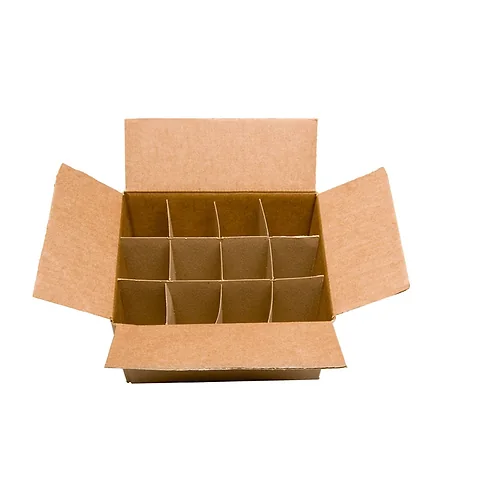
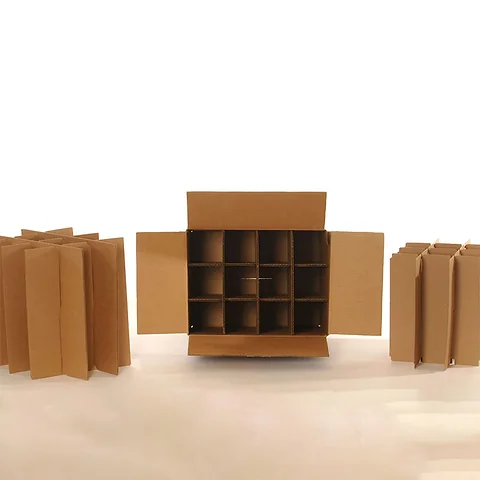
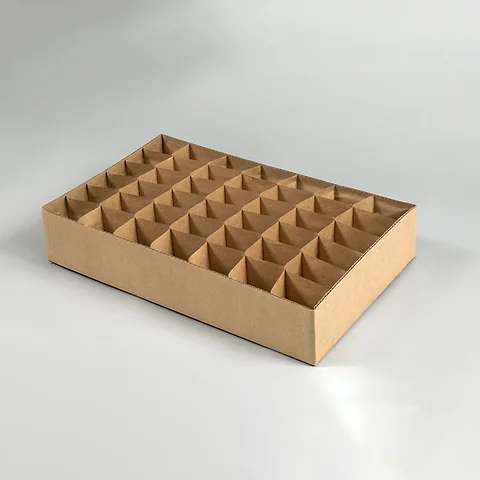
Custom Box Partitions
Custom box partitions are slotted strips of board that interlock into a grid, giving every bottle, jar or component its own cell inside a box. They stop items knocking together in transit and make packing quicker, because staff can see at a glance where each piece goes.
- Design proofFree, approved by you before printing
- PriceCustom quote by email within one working day
- Production4–7 working days after proof approval
- DeliveryFree and tracked, UK mainland, 2–3 working days
- Misprints or damageReported within 10 days, reprinted or refunded
What Partitions Do Inside a Box
When several fragile items share one box, the danger is not usually the outside impact; it is the items striking each other. Glass bottles clink and chip, jars crack at the shoulder, small metal parts scratch finishes. A partition puts a wall between every item, so the force of a knock is spread through the board rather than passed from one product to the next.
Partitions also make boxes easier to pack and check. A grid of six or twelve cells shows instantly whether a box is full, and it keeps products upright and facing the same way, which helps when the box is opened on a shop floor or a bar.
Because they are made from flat strips, partitions ship and store compactly and slot together in seconds. Many businesses keep them flat beside the packing bench and assemble them as needed. Many customers order these alongside our corrugated box dividers, printed in the same colours.
How Slotted Grids Are Built
A partition set is made of two groups of strips: one set running lengthways and one running across. Each strip has slots cut halfway through its height, and the two sets slide into each other's slots to form a grid. The number of strips sets the number of cells: two lengthways strips and three cross strips make a grid of twelve, for example.
The height of the strips is usually set a little below the inside height of the box, so the lid closes cleanly. For tall bottles, partitions can run nearly to the top to stop necks touching. For short jars, lower partitions use less board and still keep the bases apart.
Strips can also have a thumb notch cut into the top edge of each cell wall. It makes lifting a snug bottle or jar out much easier, which shop staff and customers will notice. Lighter grids for retail cartons are drawn the same way, as on our dividers for folding cartons.
- Standard grid: equal cells for identical items
- Mixed grid: wider cells on one side for larger products
- Two-tier partitions: a layer pad between two grids for stacking
- Single dividers: one or two walls splitting a box into sections
Often ordered by
- Breweries and distilleries
- Wine merchants
- Candle and preserve makers
- Cosmetics brands
- Engineering and parts suppliers
- Homeware sellers
- Labs and clinics
Popular Box Partitions Sizes
Sizes are in mm. Every order is cut to your size, so any size between these rows is fine.
| Size | Often used for |
|---|---|
| Six-cell wine grid Cells 85 x 85 mm, height 300 mm | Wine and spirit bottles |
| Twelve-cell beer grid Cells 70 x 70 mm, height 200 mm | Beer and soft drink bottles |
| Jar grid Cells 80 x 80 mm, height 90 mm | Preserves and candles in jars |
| Vial grid Cells 25 x 25 mm, height 60 mm | Vials, tubes and small parts |
| Two-section divider 300 x 200 x 100 mm box | Splitting a box into halves |
Not sure of the size? Send the product measurements and we work out the rest.
Styles
- Slotted grid partitions
- Mixed cell grids
- Two-tier grids with layer pads
- Single and double dividers
Materials
- Chipboard
- E-flute corrugated board
- B-flute corrugated board
- Double-wall corrugated board
- White or black board
- Unprinted
- One colour
- Full colour on presentation partitions
Finishes
- Plain
- Moisture-resistant coating
- Matt lamination on printed sets
Extras
- Layer pads
- Top and bottom pads
- Sets cut to existing boxes
- Flat-packed bundles
See the board and finish guide for what each option looks like.
Production and Delivery
Production takes 4–7 working days after you approve the free design proof. Delivery to the UK mainland is free and tracked, and arrives in 2–3 working days once the order leaves production. The tracking link comes to you by email.
Reprints and Refunds
Check the order when it arrives. If anything is misprinted or damaged, report it within 10 days with a photo and we reprint or refund the items affected. Read the full returns and reprints policy.
Need it by a date?
Tell us the date with your sizes and we plan the proof and production around it.
Box Partitions Specification
| Style | Slotted grid partitions, Mixed cell grids, Two-tier grids with layer pads, Single and double dividers |
|---|---|
| Material | Chipboard, E-flute corrugated board, B-flute corrugated board, Double-wall corrugated board, White or black board |
| Unprinted, One colour, Full colour on presentation partitions | |
| Finish | Plain, Moisture-resistant coating, Matt lamination on printed sets |
| Extras | Layer pads, Top and bottom pads, Sets cut to existing boxes, Flat-packed bundles |
| Size | Made to your size in mm |
| Minimum order | Low, quoted per job |
| Price | From £0.25 a box; custom quote by email within one working day |
| Proof | Free design proof before printing |
| Production | 4–7 working days after proof approval |
| Delivery | Free tracked UK mainland delivery, 2–3 working days |
Board Options for Box Partitions
Chipboard is the economical choice for light products such as small jars, cosmetics and spare parts. It is thin, cuts cleanly and keeps cost down. Corrugated board, in E-flute or B-flute, gives more cushioning and is the usual choice for glass bottles, candles in glass and heavier items. Thicker double-wall partitions suit wine, spirits and industrial parts.
If the box will be opened in front of customers, such as a gift set or a subscription box, partitions can be made in white or black board and printed. A printed partition with a pattern or the brand colour turns a functional insert into part of the presentation.
For cold or damp conditions, such as chilled drinks deliveries, ask about board with a moisture-resistant coating so the cells keep their shape.
Board colour on the inside of a shipping case rarely matters, so plain brown corrugated is the sensible default unless customers see the partitions. For small jars and cosmetics, the thinner chipboard dividers for lighter items are usually enough.
Measuring for a Snug Fit
Partitions only work if each cell holds its item firmly. Start with the inside dimensions of the outer box, not the outside measurements, which include the board thickness. Then measure the widest point of the product, usually the body of a bottle or the lid of a jar, and add a millimetre or two so items drop in easily.
Account for the thickness of the partition board itself. Every wall takes up space, so a corrugated grid of twelve cells needs a slightly larger outer box than a chipboard grid of the same layout. Send us the product and box measurements and we will calculate the cell sizes and strip lengths for you.
If your products vary, for example a mixed case of different bottle shapes, size the cells for the largest and consider a thin wrap or sleeve for the smaller ones. Our guide to measuring products for a snug box shows where to take each measurement.
Common Uses
Breweries, distilleries and wine merchants use partitions in shipping cases. Candle makers and preserve makers use them to send jars to shops. Cosmetics brands use them in gift sets to hold bottles upright. Engineering firms use them to keep machined parts separate and countable. Labs and clinics use small grids for vials and sample tubes.
Removals and storage firms also use partition sets in glassware cartons, and drinks retailers fit them into gift boxes that hold two or three bottles side by side.
Online sellers of homeware, such as glasses, mugs and ceramics, often find that adding partitions cuts breakage reports more than any amount of extra bubble wrap. Items that need a shaped cradle rather than a grid use corrugated inserts cut to shape instead.
Packing Tips
Add a layer pad of board at the bottom and top of the box with fragile items, so bases and caps are cushioned as well as the sides. For very heavy bottles, choose a stronger outer box rated for the weight as well as stronger partitions.
If you are trying partitions for the first time, start with a modest run and pack real orders with it before ordering in volume. It is the quickest way to check that items drop in easily, that the lid closes and that nothing rattles. Train packers to put the heaviest items in the corner cells where the box is strongest.
Keep an eye on returns and breakage reports after switching to partitions. If one cell position keeps producing damage, it usually points to a weak corner of the outer box or a cell that is a little too large, both easy to correct on the next order. If the grid is being made for a new box, we can supply outer shipping boxes sized to the grid in the same order.
Draw the Grid on Paper First
The quickest way to get partitions right is a sketch. Draw the inside of your box as a rectangle, mark how many cells across and how many deep, and write the product width in each cell. That sketch, with the inside dimensions of the box and the height you want the strips, is everything we need to draw the slotted pieces. Decide the board next: chipboard for light jars and cosmetics, single-wall corrugated for bottles and anything over a kilo per cell. If the grid will be seen when the box opens, say so and we quote a printed or coloured face. Pricing comes back by email within one working day with sets from £0.25 depending on board and cell count. The proof is free and shows each strip and the assembled grid, production follows 4 to 7 working days after approval, and flat bundles travel free and tracked on the UK mainland. Pads that sit above and below the grid are listed with our layer pads and other box extras.
Design Your Box Partition
Choose the box partitions photo closest to what you have in mind, add your logo, drag it into place and set the size. Send it with your sizes and we reply with a custom quote and a free design proof.
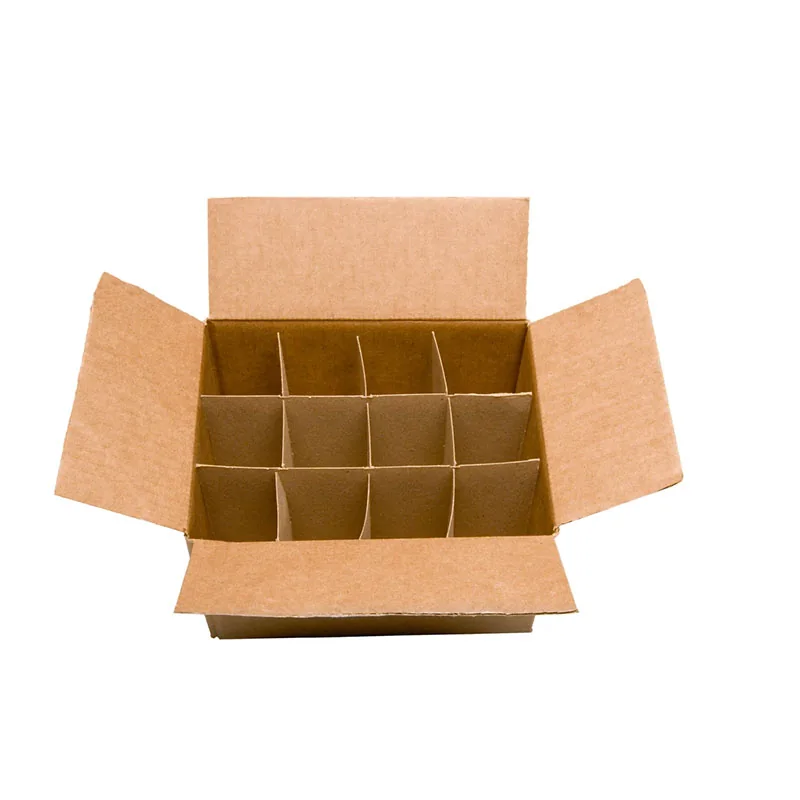

Drag the logo, or select it and use the arrow keys (Shift moves faster, + and − resize).
Related Products
Other packaging that is often ordered alongside box partitions.
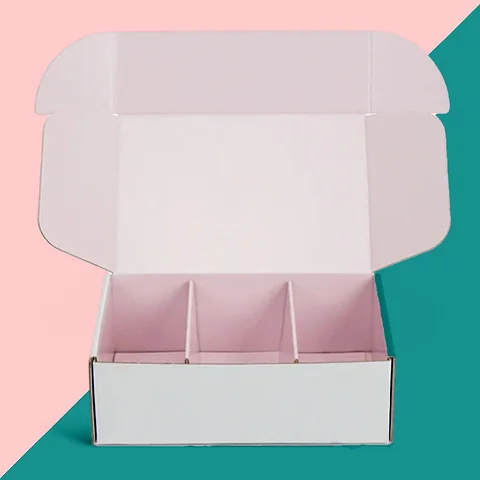
Corrugated Box Dividers
Custom corrugated box dividers are slotted partitions that slide together into a grid of cells, giving each bottle, jar or…
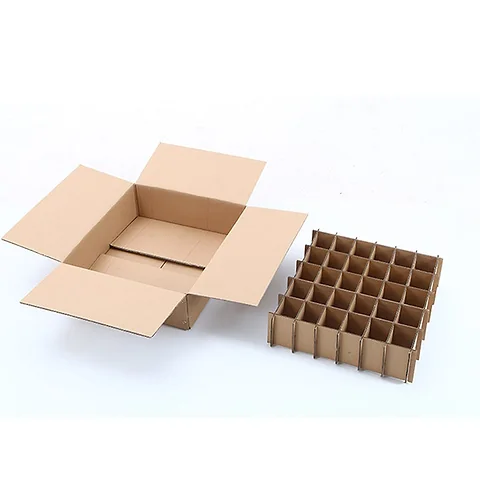
Chipboard Dividers
Custom chipboard dividers are thin, rigid card partitions that slot together into a grid and drop into a box, giving every…
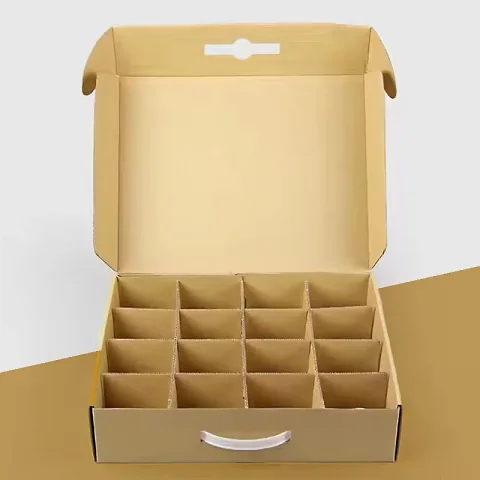
Folding Carton Dividers
Custom folding carton dividers are card grids that fold or slot together and drop into a retail box, giving each lipstick,…
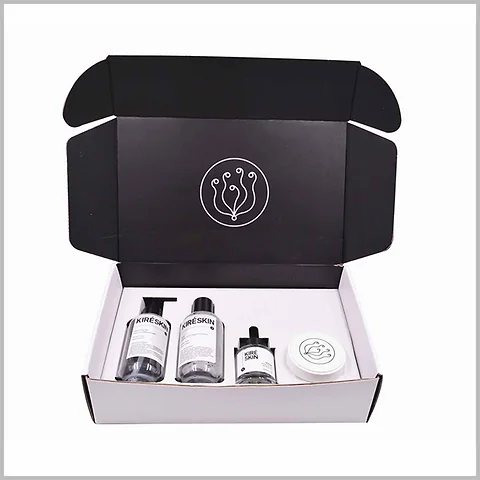
Corrugated Cardboard Inserts
Custom corrugated cardboard inserts are die-cut fitments that sit inside a box and hold each item in its own pocket, so…
Box Partitions Questions
What buyers ask before ordering box partitions.
Should I measure the inside or outside of my box?
The inside. Partitions must fit within the internal dimensions, which are smaller than the outside measurements.
Chipboard or corrugated partitions?
Chipboard suits light items and keeps costs low. Corrugated board gives more cushioning for glass and heavier products.
How tall should the partitions be?
Just below the box's inside height so the lid closes. For tall bottles, run them high enough to keep the necks apart.
Can a wine grid have wider cells for magnums?
Yes, a mixed grid can have two wider cells along one side and standard cells elsewhere. The slots are simply cut at different spacings on the long strips. Tell us the diameters of each bottle and we work out the layout.
Can partitions be printed?
Yes. Printed white or black partitions suit gift sets and subscription boxes where the inside is part of the presentation.
Do partitions work in damp conditions?
Standard board softens if it stays damp, so ask for a moisture-resistant coating if boxes will be chilled or stored in a cold room. The coating is applied to the strips before cutting. For brief condensation from cold bottles, plain corrugated usually copes.
Can you make partitions for boxes I already have?
Yes. Send us the inside measurements of your existing box and we size the grid to fit.
Do I need layer pads as well?
For fragile glass or stacked layers, yes. Pads at the top and bottom protect bases and caps.
Do partitions arrive assembled or as flat strips?
As flat strips, bundled by length, so they take up little space. They slot together in seconds at the packing bench with no glue or tape. Large grids can be supplied part-assembled on request.
Can you work out the cell sizes for me?
Yes. Send product and box measurements and we calculate the strip lengths and cell sizes.
Get a Price for Your Box Partitions
Fill in as much as you know. Sizes are in mm (internal sizes for boxes). If you have artwork, attach it; if not, a logo is enough to start the proof.
We reply with a custom quote by email within one working day, then send a free design proof before anything is printed.
- Phone+44 7578 382054
- WhatsAppMessage us
- Emailinfo@shopcustomboxes.co.uk
- HoursMonday to Friday, 9 am to 5.30 pm UK time
- OfficeOffice 704, 85 Dunstall Hill, Wolverhampton, WV6 0SR