 Custom Mailer Boxes
 Custom Shipping Boxes
 Custom Cardboard Boxes
 Custom Kraft Boxes
 Custom Product Boxes
 Custom Retail Boxes
 Custom Tuck End Boxes
 Custom Pillow Boxes
 Custom Window Boxes
 Custom Rigid Boxes
 Custom Gift Boxes
 Custom Magnetic Boxes
 Custom Sleeve Boxes
 Custom Printed Boxes
 Custom Boxes with Logo
 Custom Box Inserts
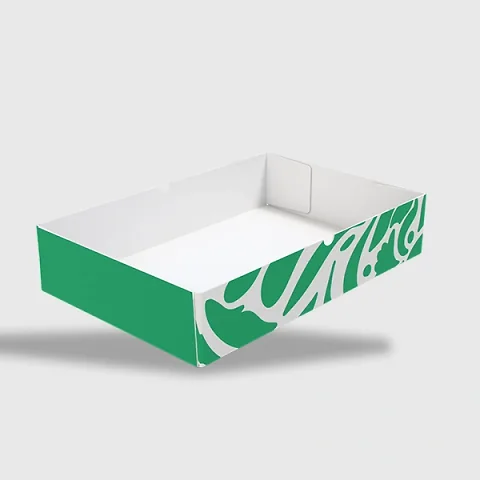
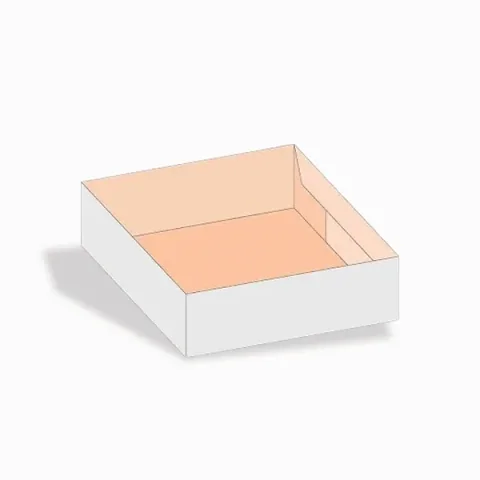
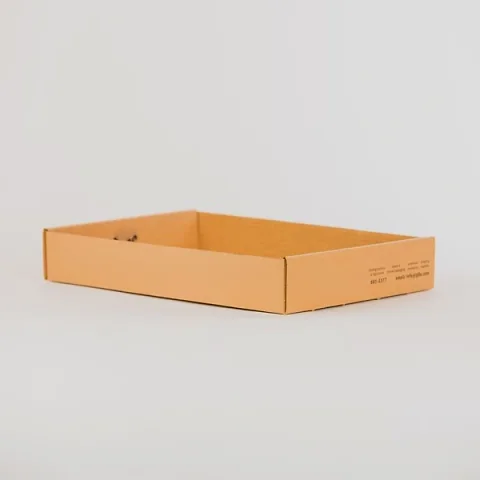
Custom Four Corner Trays
Four corner trays get their name from the glued posts in each corner, which make the tray stiff and let one tray sit squarely on top of another. They are a workhorse for food service, bakery counters, produce and shelf displays, and we print them to your size and brand.
- Design proofFree, approved by you before printing
- PriceCustom quote by email within one working day
- Production4–7 working days after proof approval
- DeliveryFree and tracked, UK mainland, 2–3 working days
- Misprints or damageReported within 10 days, reprinted or refunded
What Makes a Four Corner Tray Different
A simple folded tray relies on its walls alone for strength. A four corner tray adds a small triangular or square post in each corner, formed by folding and gluing extra panels from the same blank. Those posts take the weight when trays are stacked, so the walls do not crush, and they keep the corners at a clean right angle even when the tray is full.
The result is a tray that behaves predictably. It sits flat on a counter, stacks in neat columns on a trolley and survives being lifted by one end without twisting. For businesses that handle dozens of trays a day, that consistency saves time and stops products from being bruised or squashed.
It is also a forgiving tray to pack. Staff can load it quickly from above, and the straight walls make it easy to line products up in neat rows that look good when the tray goes on display. p2 The open-sided alternative for single portions is our paper food boats for counter service.
Where Four Corner Trays Are Used
In food service they carry sandwiches, pastries, sushi and finger food from a kitchen to a counter or an event. Bakeries use them for bread rolls, cookies and traybakes sold by the piece. Greengrocers and farm shops use them for soft fruit, tomatoes and mushrooms, where a stacked display looks abundant without crushing the bottom layer. Retailers use printed versions as shelf trays for jars and boxed goods. p0 Heavier loads stacked high move up to our double wall trays for stacking.
- Sandwich and pastry platters for catering
- Bakery counter trays for rolls and cookies
- Produce trays for soft fruit and vegetables
- Retail shelf trays for jars and cartons
- Stackable trays for market stalls
- Lidded trays for delivery and takeaway platters
Often ordered by
- Caterers and event food companies
- Bakeries and cafes
- Greengrocers and farm shops
- Market stall traders
- Food producers supplying retailers
- Delis
Popular Four Corner Trays Sizes
Sizes are in mm. Every order is cut to your size, so any size between these rows is fine.
| Size | Often used for |
|---|---|
| Cookie tray 200 x 150 x 40 mm | Cookies and small pastries |
| Punnet tray 300 x 200 x 80 mm | Soft fruit punnets |
| Sandwich platter 350 x 250 x 70 mm | Catering sandwiches and wraps |
| Bakery tray 400 x 300 x 60 mm | Bread rolls and traybakes |
| Produce tray 400 x 300 x 100 mm | Vegetables and loose produce |
Not sure of the size? Send the product measurements and we work out the rest.
Styles
- Four corner open tray
- Four corner tray with lid
- Tray with hand holes
- Divided four corner tray
Materials
- Folding boxboard
- E-flute corrugated
- B-flute corrugated
- Kraft corrugated
- Food-contact grade board on request
- Full colour CMYK
- One or two colour flexo
- Inside base print
- Plain unprinted
Finishes
- Grease-resistant coating
- Water-resistant coating
- Matt varnish
- Gloss varnish
Extras
- Fitted lids
- Card dividers
- Hand holes
- Glassine or greaseproof liners
See the board and finish guide for what each option looks like.
Production and Delivery
Production takes 4–7 working days after you approve the free design proof. Delivery to the UK mainland is free and tracked, and arrives in 2–3 working days once the order leaves production. The tracking link comes to you by email.
Reprints and Refunds
Check the order when it arrives. If anything is misprinted or damaged, report it within 10 days with a photo and we reprint or refund the items affected. Read the full returns and reprints policy.
Need it by a date?
Tell us the date with your sizes and we plan the proof and production around it.
Four Corner Trays Specification
| Style | Four corner open tray, Four corner tray with lid, Tray with hand holes, Divided four corner tray |
|---|---|
| Material | Folding boxboard, E-flute corrugated, B-flute corrugated, Kraft corrugated, Food-contact grade board on request |
| Full colour CMYK, One or two colour flexo, Inside base print, Plain unprinted | |
| Finish | Grease-resistant coating, Water-resistant coating, Matt varnish, Gloss varnish |
| Extras | Fitted lids, Card dividers, Hand holes, Glassine or greaseproof liners |
| Size | Made to your size in mm |
| Minimum order | Low, quoted per job |
| Price | From £0.25 a tray; custom quote by email within one working day |
| Proof | Free design proof before printing |
| Production | 4–7 working days after proof approval |
| Delivery | Free tracked UK mainland delivery, 2–3 working days |
Choosing Board for the Job
Folding boxboard trays suit lighter dry goods and catering, and they take crisp full colour print. For heavier loads and stacking, E-flute or B-flute corrugated is the safer choice; the flutes give the walls more crush resistance and the corner posts carry more weight. Produce trays sometimes use kraft corrugated with a plain look, which shrugs off the odd damp leaf or soil mark.
Where food sits directly on the tray, food-contact grade board is available on request, and a grease-resistant coating helps with pastries, fried snacks or anything buttery. If your trays go into chilled cabinets, mention it so we can suggest a coating that copes with condensation.
Stacking and Nesting
Stackability is the reason many buyers choose this tray. When the corner posts are slightly taller than the products inside, a second tray can sit on the posts without touching the food underneath. That is useful for catering platters and fruit, where you want height on a display without pressure on the bottom layer. We can set the post height a few millimetres above your product height for exactly this purpose.
Some trays are also designed with a small lock tab or a lid that fits over the posts, turning the tray into a closed box for delivery. Others have a hand hole cut in the end walls so staff can lift a full stack safely. p1 Clear lids for display are shown on our four corner display lids page.
Sizing Trays for Shelves, Trolleys and Vans
Start with what goes in and how it is arranged. For catering, think in terms of portions: how many sandwiches or pastries per tray, laid flat or on edge. For produce, think about the punnets or loose fruit you want to fit. Then measure the space the tray will live in, such as a display chiller shelf, a trolley or the boot of a delivery van, and work to a footprint that fits several trays side by side without gaps.
Wall height usually sits between 40 and 100 mm. Lower walls show more of the product on a counter; higher walls keep loose items contained during transport. We will check your proposed size against these points and suggest adjustments on the proof.
Caterers who use four corner trays every day tend to settle on a small family of sizes that share a footprint. A half-size tray and a full-size tray that sit neatly side by side on a trolley make loading quicker and stop trays sliding around in a van. If you already use standard catering trolleys or chiller shelves, give us those internal measurements and we will design around them.
Another tip is to think about how trays come back. Some caterers collect empty trays after events, while others treat them as single use. If yours come back, a slightly heavier board and a wipe-clean coating extend their life. If they are single use, a lighter board saves money with no loss in performance.
Finally, store flat trays somewhere dry and away from ovens or steam. Corrugated board softens in a humid kitchen, and a tray that has absorbed moisture loses some of the stacking strength that made you choose it in the first place. p4 The guide to measuring a product for a box covers working from a shelf size backwards.
Printing Your Trays
A plain tray works perfectly well, but print turns it into a small advert. Catering firms print their name and contact details along the side walls so every platter delivered to an office carries their details back into the room. Bakeries use a repeating pattern or logo. Retail shelf trays carry the product range name on the front lip where shoppers see it.
Full colour printing suits white board and white-lined corrugated. One or two spot colours on kraft keeps costs lower and looks natural. Printing the inside base is also possible, which shows through between products and looks good on cookie and pastry trays.
Keep text away from the corner posts, where folds and glue lines can interrupt it. p2 Grease-resistant liners for the base are covered on our printed greaseproof paper page.
Give Us the Trolley Shelf Size, Not Just the Tray
Four corner trays live on trolleys, chiller shelves and van floors, so the measurement that saves most trouble is the space they sit in. Measure the internal width and depth of your trolley shelf or chiller, tell us how many trays should fit side by side, and we size a footprint that fills it without gaps; a half-size and a full-size that share one dimension pack a van far better than two unrelated sizes.
Then say what goes in and how tall it stands, because the corner posts are cut a few millimetres above the product so a stacked tray never touches the food. Say whether the trays come back after events, which decides the board weight. The custom quote arrives by email within one working day, with the minimum set per job.
The free proof shows the flat blank and the folded tray with the post height marked. Production takes 4 to 7 working days after approval and the pre-glued trays reach UK mainland addresses flat by free tracked delivery. Caterers who need a closed version add our foot-lock trays with a fitted lid in the same print.
Design Your Four Corner Tray
Choose the four corner trays photo closest to what you have in mind, add your logo, drag it into place and set the size. Send it with your sizes and we reply with a custom quote and a free design proof.
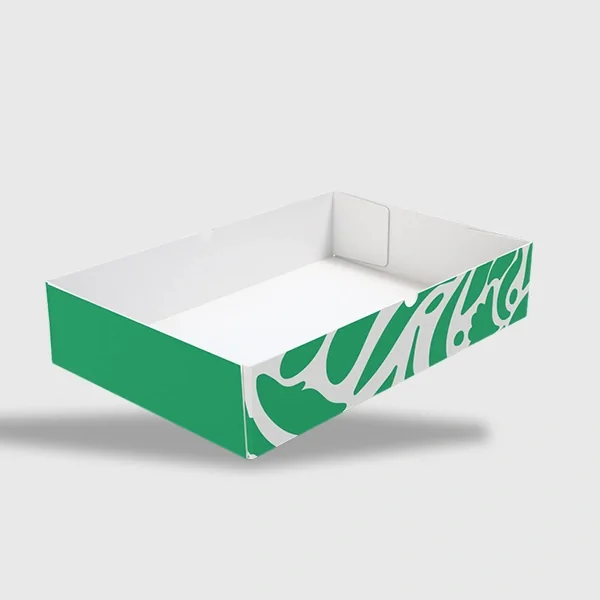

Drag the logo, or select it and use the arrow keys (Shift moves faster, + and − resize).
Related Products
Other packaging that is often ordered alongside four corner trays.
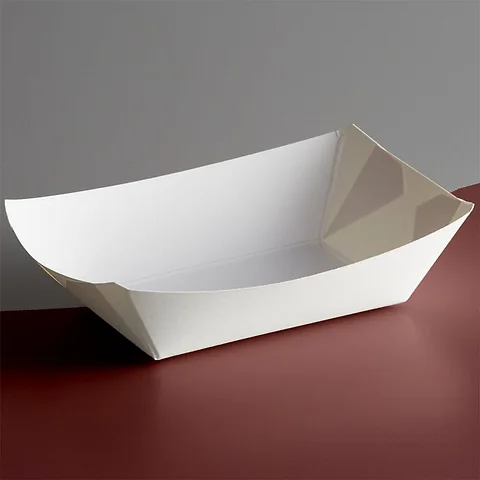
Paper Food Trays
Paper food trays are open card trays that hold chips, hot dogs, loaded fries and snacks for eating on the spot.
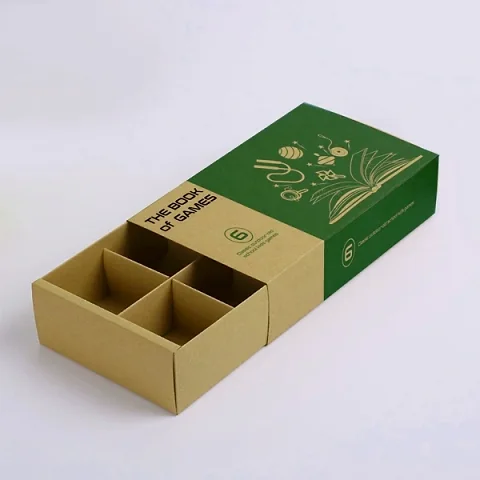
Double Wall Trays
Custom double wall trays have sides that fold back on themselves, giving two layers of board around the rim and a tray that…
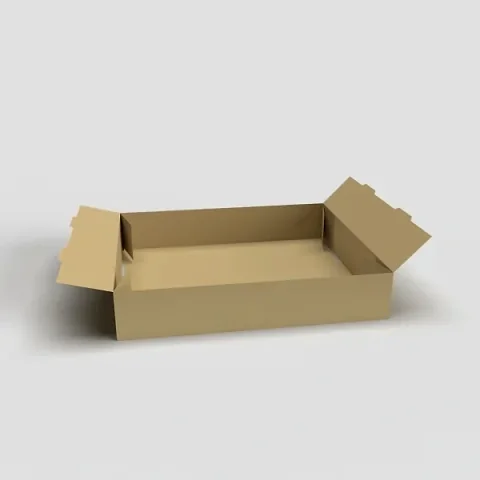
Foot Lock Trays
Custom foot lock trays fold up from a flat sheet and hold their shape with small foot tabs that lock into slots in the base,…
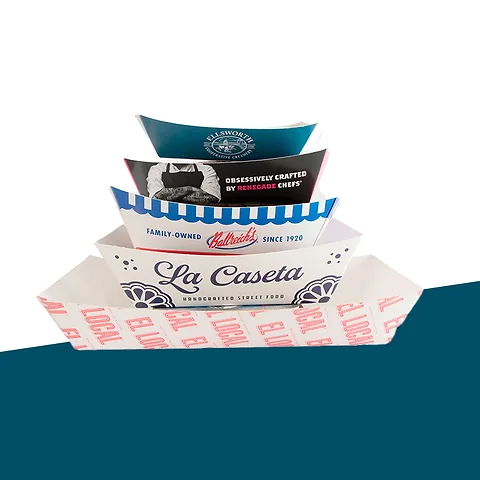
Paper Food Boats
Custom paper food boats are open trays with angled sides that hold chips, nachos, loaded fries and street snacks in a shape…
Four Corner Trays Questions
What buyers ask before ordering four corner trays.
Why choose a four corner tray over a simple folded tray?
The glued corner posts make the tray stiffer and allow stacking without crushing. They keep the corners square and the tray flat when full. For regular handling and stacking, the difference is noticeable.
Can stacked trays avoid touching the food below?
Yes. We set the corner posts slightly taller than your product so the next tray rests on the posts. This works well for catering platters and soft fruit.
Do four corner trays come with lids?
Lids can be made to fit over the corner posts, turning the tray into a closed box for delivery. Clear lids are also possible for display.
Which board handles heavy produce?
B-flute corrugated gives the best crush resistance for heavier produce. E-flute works for lighter loads and prints more crisply. We suggest a grade based on weight.
Can I use these trays for greasy pastries?
A grease-resistant coating on the inside helps stop oil marking the board. A greaseproof or glassine liner adds extra protection. Food-contact grade board is available on request.
Do the trays arrive assembled?
Most four corner trays arrive pre-glued at the corners and flat, then pop into shape. Some styles fold and lock by hand. Your proof will show which style you are getting.
Can trays go in a chiller cabinet?
Yes, with a water-resistant coating to cope with condensation. Let us know about chilled use when you ask for a custom quote.
Can you add hand holes to the ends?
Hand holes can be cut into the end walls so staff can lift full trays safely. They are useful for bakery and produce trays.
What print works best for catering trays?
Name and contact details along the side walls work well, as they remain visible when the tray is on a table. A simple logo pattern adds branding without looking busy.
Can I order a few sizes at once?
Yes. Several tray sizes can be quoted together, and they can share one design. That suits caterers with different platter sizes.
What if some trays arrive with split corners?
Report any damaged or misprinted trays within 10 days with photos, and we will reprint or refund them. The undamaged trays are fine to use straight away.
Get a Price for Your Four Corner Trays
Fill in as much as you know. Sizes are in mm (internal sizes for boxes). If you have artwork, attach it; if not, a logo is enough to start the proof.
We reply with a custom quote by email within one working day, then send a free design proof before anything is printed.
- Phone+44 7578 382054
- WhatsAppMessage us
- Emailinfo@shopcustomboxes.co.uk
- HoursMonday to Friday, 9 am to 5.30 pm UK time
- OfficeOffice 704, 85 Dunstall Hill, Wolverhampton, WV6 0SR