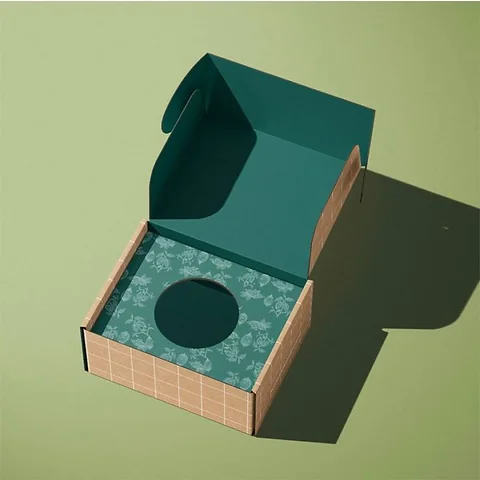
 Custom Mailer Boxes
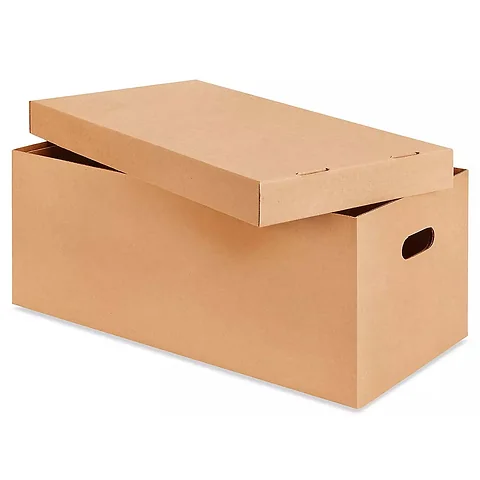 Custom Shipping Boxes
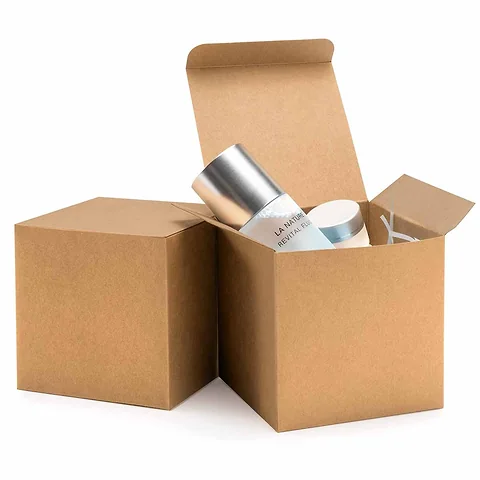 Custom Cardboard Boxes
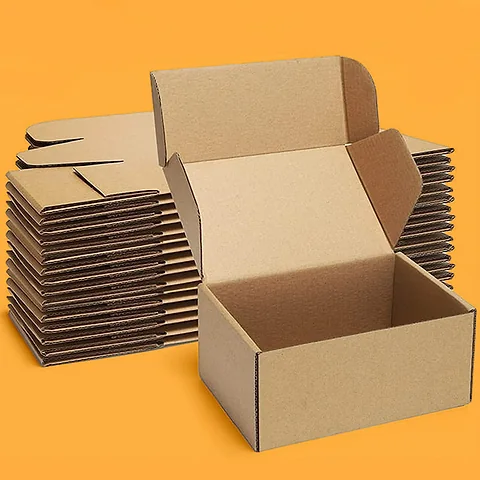 Custom Kraft Boxes
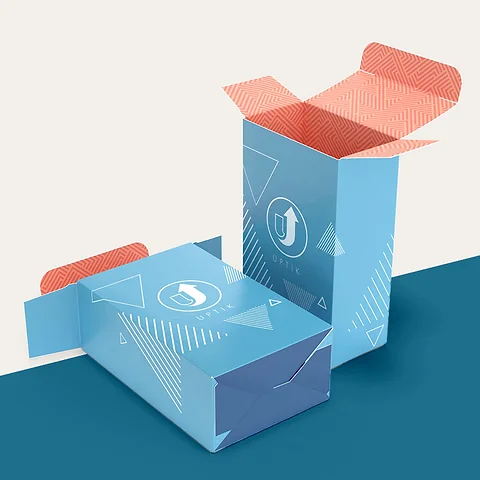 Custom Product Boxes
 Custom Retail Boxes
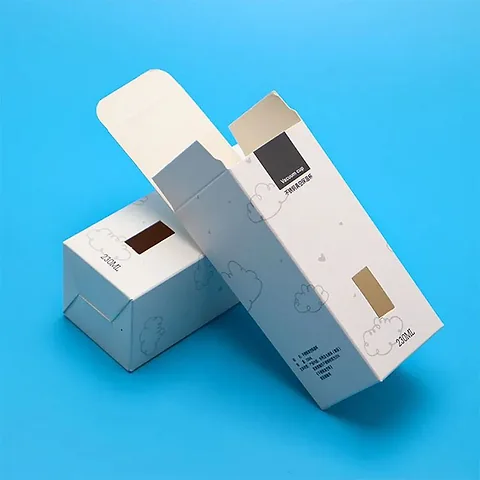 Custom Tuck End Boxes
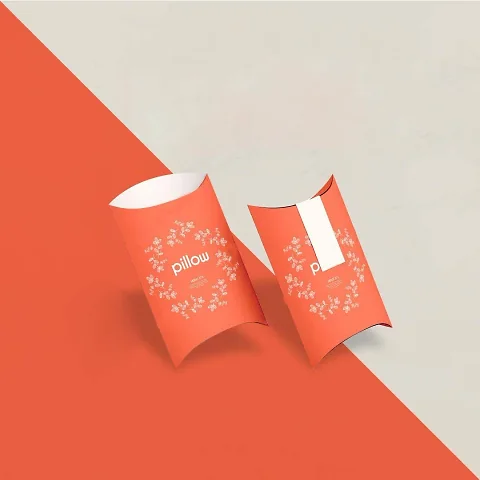 Custom Pillow Boxes
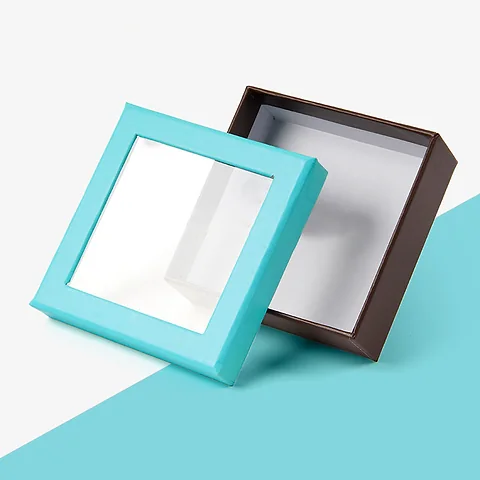 Custom Window Boxes
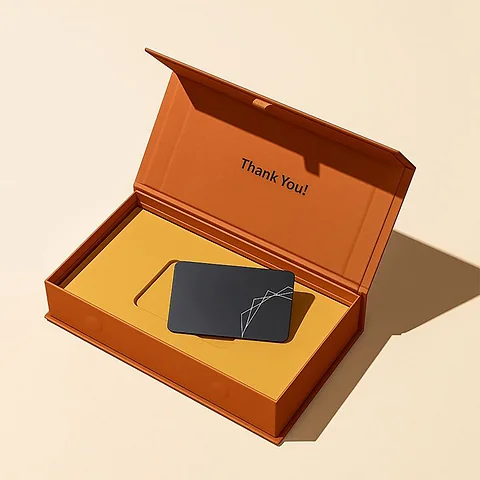 Custom Rigid Boxes
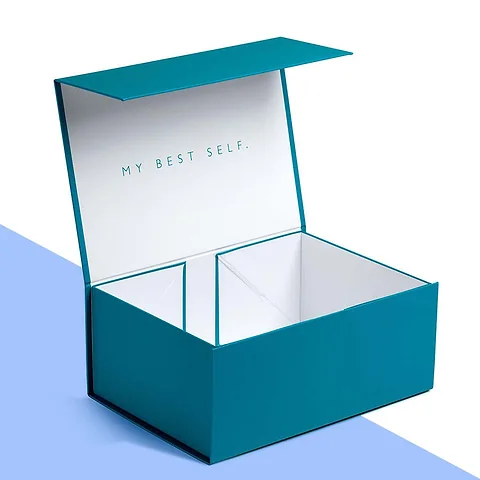 Custom Gift Boxes
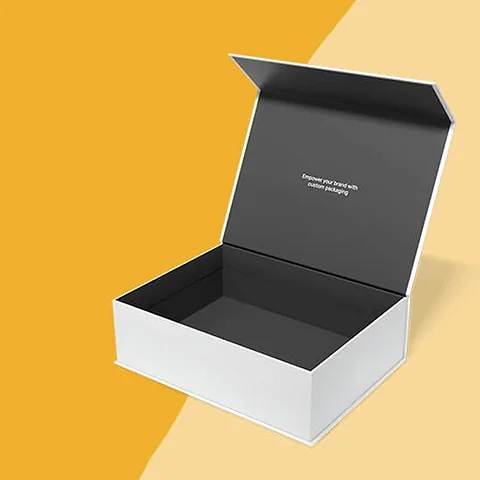 Custom Magnetic Boxes
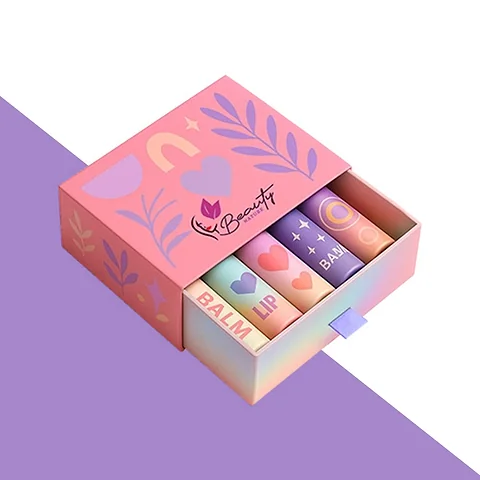 Custom Sleeve Boxes
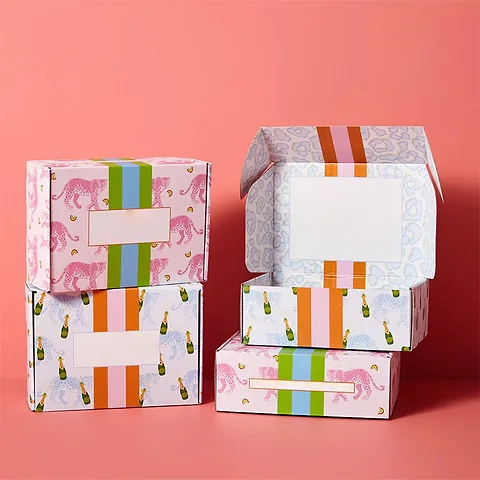 Custom Printed Boxes
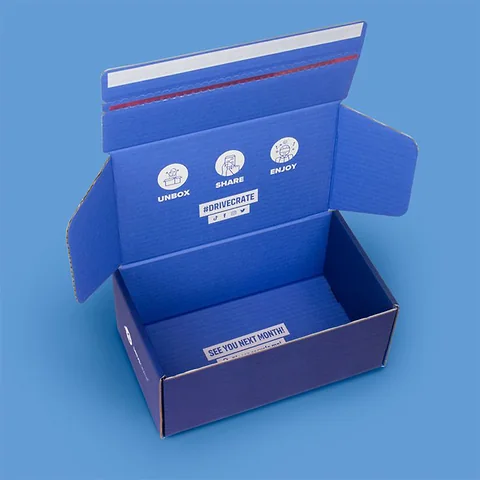 Custom Boxes with Logo
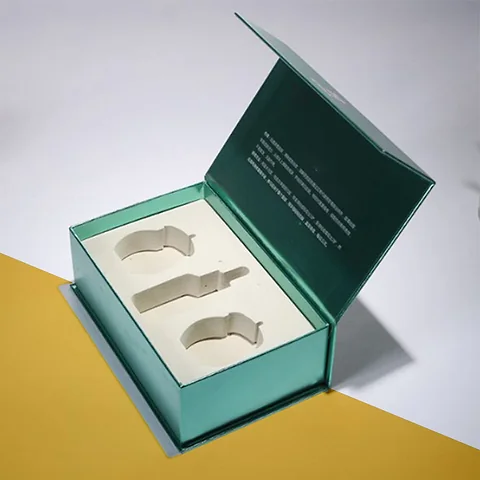 Custom Box Inserts
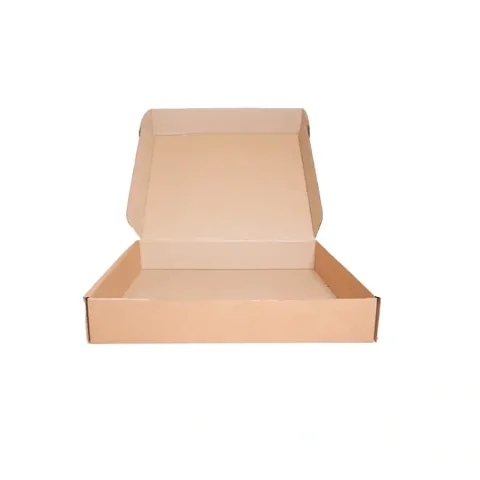
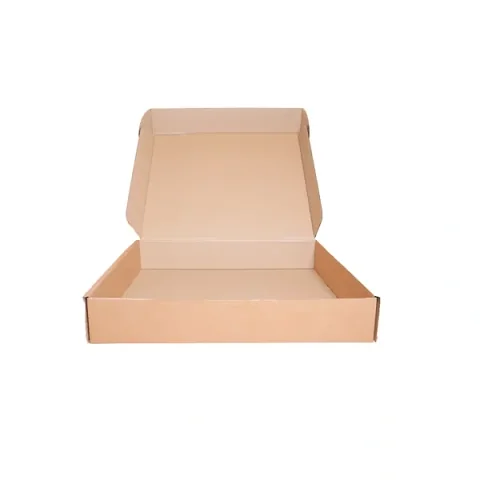
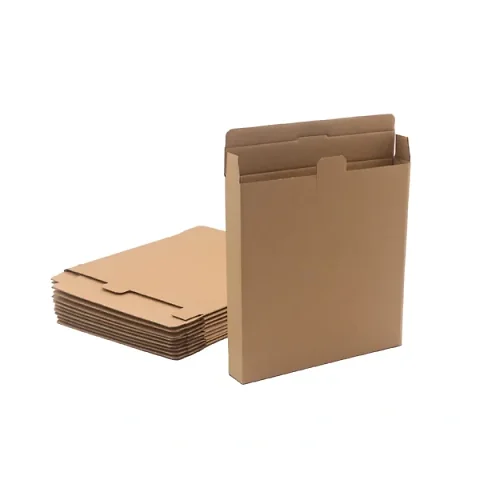
Custom Flat Cardboard Boxes
Custom flat cardboard boxes are low-profile mailers for things that are wide but thin: art prints, diplomas, calendars, books, clothing and slim gadgets. Cut to your exact size and printed with your branding, they protect the edges and corners that a padded envelope would let bend.
- Design proofFree, approved by you before printing
- PriceCustom quote by email within one working day
- Production4–7 working days after proof approval
- DeliveryFree and tracked, UK mainland, 2–3 working days
- Misprints or damageReported within 10 days, reprinted or refunded
When an Envelope Is Not Enough
A hardback envelope protects the middle of a print but not its corners, and a padded bag protects against knocks but folds with the contents. Flat cardboard boxes give you rigid walls on all four sides and a stiff lid and base, so a print, photograph or diploma reaches the customer exactly as it left your studio. They also open more neatly. Rather than tearing a bag, the customer lifts a tuck flap or pulls a tear strip and finds the item lying flat and clean.
The shape suits far more than paper. Slim knitwear, silk scarves, notebooks, phone cases, vinyl records, puzzle sets, chocolate bars and flat-pack craft kits all travel well in a box whose depth is measured in tens of millimetres rather than hundreds.
There is a cost argument too. A box built to the size of the item uses less board and less void fill than a standard carton with paper scrunched around a print. It also weighs less, which matters when you post hundreds of orders a month and every courier band is set by weight and size.
Letterbox Depth and Why It Matters
Royal Mail treats anything up to 25 mm deep, 250 mm wide and 353 mm long as a large letter, which is far cheaper to send than a small parcel and can go straight through most front doors. If your item fits, sizing the box to sit just inside those limits can cut your postage bill noticeably and spare customers a trip to the sorting office, which is the thinking behind our Large Letter postal boxes.
The catch is that every millimetre counts. Corrugated board itself has thickness, so a box with 25 mm outer depth gives you less inside. We measure from the outside when a box is meant for letterbox posting and tell you the usable inside depth on the proof, so there are no surprises when the first parcel goes over the counter.
- E-flute corrugated: thin, stiff and the usual pick for letterbox boxes
- B-flute corrugated: more crush strength for heavier flat items
- Rigid folding board: for very slim, light items like cards and prints
- Outside dimensions checked against your postage limits on the proof
Often ordered by
- Illustrators and print sellers
- Photographers
- Publishers and bookshops
- Fashion labels posting folded garments
- Stationery and planner brands
- Training providers sending diplomas
- Marketing teams posting client kits
Popular Flat Cardboard Boxes Sizes
Sizes are in mm. Every order is cut to your size, so any size between these rows is fine.
| Size | Often used for |
|---|---|
| Large letter A4 320 x 230 x 22 mm | A4 prints, diplomas and slim books |
| A5 flat 220 x 160 x 20 mm | Notebooks, planners and greeting card sets |
| Square print 310 x 310 x 20 mm | Square art prints and vinyl sleeves |
| A3 flat 440 x 315 x 25 mm | A3 posters and art prints |
| Clothing flat 300 x 250 x 50 mm | Folded T-shirts, scarves and knitwear |
Not sure of the size? Send the product measurements and we work out the rest.
Styles
- Roll end tuck front mailers
- Tear-strip mailers with peel-and-seal
- Tray and lid sets
- Crash-lock trays
- Wraparound book mailers
Materials
- E-flute corrugated kraft
- E-flute corrugated white-lined
- B-flute corrugated
- Rigid folding boxboard
- Full colour outside
- Full colour inside
- One or two colour flexo on kraft
- White ink on kraft
Finishes
- Matt varnish
- Gloss varnish
- Uncoated natural
Extras
- Backing cards
- Corner pockets
- Tear strips
- Peel-and-seal closures
- Branded tissue
See the board and finish guide for what each option looks like.
Production and Delivery
Production takes 4–7 working days after you approve the free design proof. Delivery to the UK mainland is free and tracked, and arrives in 2–3 working days once the order leaves production. The tracking link comes to you by email.
Reprints and Refunds
Check the order when it arrives. If anything is misprinted or damaged, report it within 10 days with a photo and we reprint or refund the items affected. Read the full returns and reprints policy.
Need it by a date?
Tell us the date with your sizes and we plan the proof and production around it.
Flat Cardboard Boxes Specification
| Style | Roll end tuck front mailers, Tear-strip mailers with peel-and-seal, Tray and lid sets, Crash-lock trays, Wraparound book mailers |
|---|---|
| Material | E-flute corrugated kraft, E-flute corrugated white-lined, B-flute corrugated, Rigid folding boxboard |
| Full colour outside, Full colour inside, One or two colour flexo on kraft, White ink on kraft | |
| Finish | Matt varnish, Gloss varnish, Uncoated natural |
| Extras | Backing cards, Corner pockets, Tear strips, Peel-and-seal closures, Branded tissue |
| Size | Made to your size in mm |
| Minimum order | Low, quoted per job |
| Price | From £0.25 a box; custom quote by email within one working day |
| Proof | Free design proof before printing |
| Production | 4–7 working days after proof approval |
| Delivery | Free tracked UK mainland delivery, 2–3 working days |
Choosing a Style for Your Flat Cardboard Boxes
A roll end tuck front mailer is the most popular style. It folds from one piece, has double-thickness side walls and closes with a tuck flap that locks under dust flaps, so it needs no tape for light contents. A crash-lock tray with a separate lid suits presentation pieces, where the customer lifts the lid off rather than opening a hinge. A tear-strip mailer with a peel-and-seal strip suits high-volume dispatch because packing is a matter of folding, peeling and pressing.
For prints and diplomas, we can add a scored backing card or corner pockets inside so the item cannot slide and rub against the walls. For clothing, a sheet of tissue folded over the garment does the same job and makes the opening feel finished.
Measuring Flat Items Properly
Lay the item flat and measure the length and width at the widest points, then measure the thickest point, including any packaging such as a cello sleeve or a rigid backing board. For prints, add 5 to 10 mm on each side so the paper does not touch the walls, and add the thickness of any backing you plan to use, as the guide to measuring your product explains. For folded clothes, fold the garment the way you will pack it, press it lightly and measure the result, not the shop-display fold.
If you sell several sizes, such as A4, A3 and square prints, it is worth asking whether one or two box sizes can cover them with a backing card. Fewer sizes keep stock simple and setup costs lower, and an insert costs less than an extra box design.
Books deserve a special mention. A wraparound book mailer folds tightly around the cover, so a paperback or hardback cannot shift and bump its corners. It is sized to the book's height, width and spine depth, and suits publishers and bookshops sending one or two titles at a time.
Printing Inside and Out
Plain kraft boxes with a one-colour logo on the lid are practical and cost-effective. For a stronger first impression, full-colour printing on a white-lined board lets you cover the outside in pattern or photography. Printing on the inside is popular with artists and small fashion brands, because the customer sees it the moment they open the lid, and the outside can stay understated in the post.
Keep the address area clear. A courier label needs a flat, light-coloured space of about 100 x 150 mm, and a busy pattern underneath can stop scanners reading the barcode. We can leave a printed panel blank for exactly this purpose.
- Outside lid: logo and a clear label area
- Inside lid: thank-you message, care notes or social handles
- Side walls: a short brand line visible when stacked
- Tuck flap: a neat place for a discount code
Who Uses Flat Mailers
Illustrators and photographers sending prints, publishers sending signed books and calendars, schools and awarding bodies sending diplomas, fashion labels sending folded T-shirts and scarves, and stationery makers posting planners all rely on the flat format. So do businesses posting marketing kits to clients, where a slim branded box looks far more considered than a padded envelope, and art sellers who want the deeper art print shipping boxes for mounted work.
For any of them, the box also becomes part of the product. Customers keep good flat boxes for storing their own papers and photographs, which keeps your logo in their home long after the delivery.
Flat boxes also suit businesses that send paperwork with weight to it, such as framed diplomas, laminated menus or sample swatch books. In those cases we lean toward B-flute board so the box resists bending when it is squeezed between parcels in a sack.
Decide Letterbox or Parcel First, Then Measure the Thickest Item
The one decision that shapes a flat box is whether it must go through a letterbox. If it does, the outside has to stay within 25 mm deep, 250 mm wide and 353 mm long, so we work from those limits inwards and the board thickness comes off the inside. If it does not, the box can be deeper and the choice opens up to B-flute for heavier contents. Then measure the thickest thing you post, with its sleeve or backing board. Keep a plain 100 x 150 mm panel on the lid for the address label.
Send the item measurements, a rough monthly quantity and whether letterbox sizing matters, and a custom quote comes by email within one working day, minimums low and quoted per job so a new print shop can start small. A free design proof shows the dieline with inside and outside print. Production takes 4 to 7 working days after approval and the flat bundles travel on free tracked delivery to UK mainland addresses in 2 to 3 working days. Sellers who post folded clothing alongside prints usually add the slim shirt boxes in the same style.
Design Your Flat Cardboard Box
Choose the flat cardboard boxes photo closest to what you have in mind, add your logo, drag it into place and set the size. Send it with your sizes and we reply with a custom quote and a free design proof.

Drag the logo, or select it and use the arrow keys (Shift moves faster, + and − resize).
Related Products
Other packaging that is often ordered alongside flat cardboard boxes.
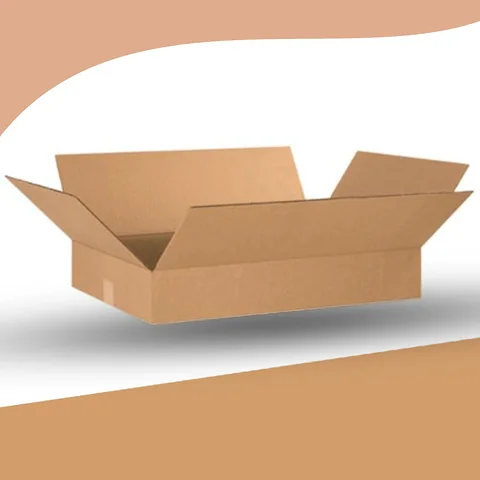
24 x 24 x 4 Flat Kraft Boxes
24 x 24 x 4 flat kraft boxes are wide, shallow corrugated cartons of about 610 x 610 x 102 mm, made for items that are large…
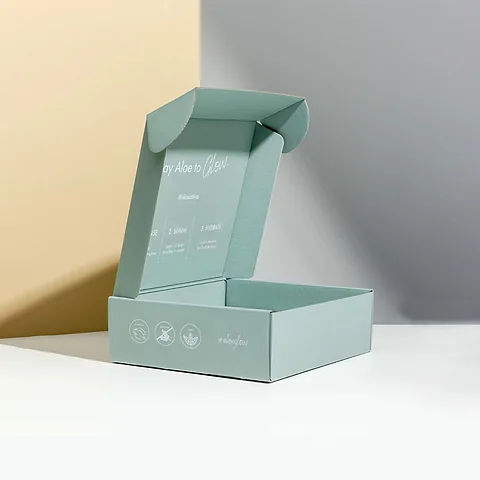
Corrugated Folding Boxes
Custom corrugated folding boxes arrive flat, store in a fraction of the space of made-up cartons and fold into a strong…
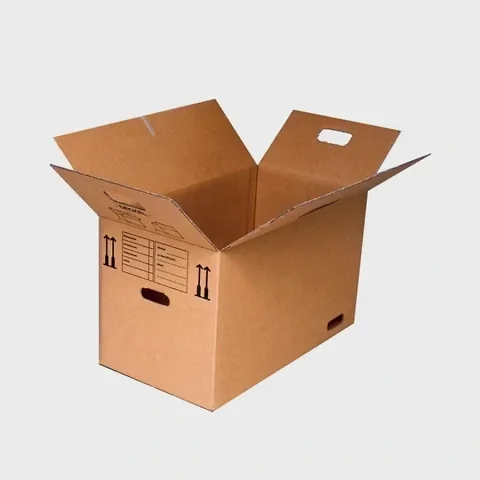
Full Overlap Containers
Custom full overlap containers are corrugated boxes whose outer flaps each reach the full width of the box, so the top and…
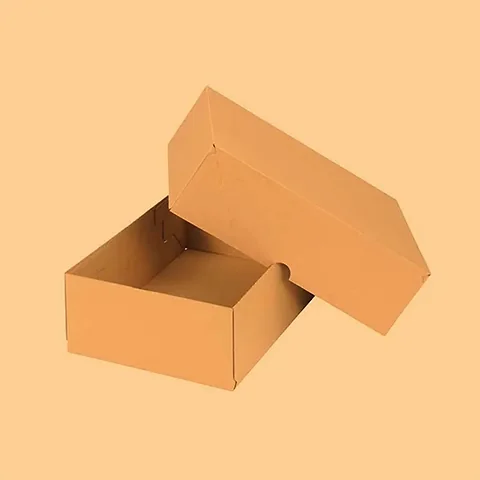
Cardboard Boxes with Lids
Cardboard boxes with lids are two-piece corrugated boxes: a base and a separate lid that lifts straight off.
Flat Cardboard Boxes Questions
What buyers ask before ordering flat cardboard boxes.
Can flat cardboard boxes go through a letterbox?
Yes, if the outer size stays within large letter limits of 25 mm deep, 250 mm wide and 353 mm long. We size from the outside for letterbox boxes and confirm the inside depth on the proof. Many front doors take this size easily.
What is the thinnest board you use?
E-flute corrugated is about 1.5 mm thick and gives good stiffness for its weight. For very light items like cards, a rigid folding board can be thinner still. We suggest the board once we know what you are posting.
How do I stop a print sliding around inside?
A backing card cut to the inside size, or corner pockets, hold the print in place. Leaving 5 to 10 mm around the paper also stops the edges catching on the walls. Both can be added to your order.
Do flat mailers need tape?
Tuck front mailers lock without tape for most light contents. For heavier items or extra security, a peel-and-seal strip or a branded sticker keeps them closed. Tear-strip versions also make opening tidy for the customer.
Can a flat mailer be printed inside as well as out?
Yes. Inside printing is popular because it surprises the customer on opening while the outside stays simple in transit. Both faces are printed in one run, so adding the inside costs less than you might expect.
Can one box cover A4 and A5 items?
It can if you add an insert or backing card for the smaller size. It saves holding stock of two boxes. We can quote the box and inserts together.
Where should the address label go on a printed flat box?
Keep a light, flat area of about 100 x 150 mm on the lid. Heavy pattern behind a label can confuse courier scanners, so we leave that panel plain in the design and mark it on the proof.
Can I post vinyl records in these boxes?
A square flat box with a little extra depth works well for records, and corner protectors stop the sleeve corners bending. Heavier double-album packs may need B-flute board. Tell us the record count per box.
Can I put a branded sticker on a plain flat mailer instead of printing?
Yes, and it is a sensible start for a brand testing a new box size. A plain kraft mailer with a printed sticker seal costs less upfront. When volumes grow, moving to a printed box is a simple switch on the same size.
Can a new print shop order 100 flat mailers to start?
Yes. Minimums are low and quoted per job, so a run of that size lets a new shop test a box size before ordering more. Reorders of the same design need no new setup.
Get a Price for Your Flat Cardboard Boxes
Fill in as much as you know. Sizes are in mm (internal sizes for boxes). If you have artwork, attach it; if not, a logo is enough to start the proof.
We reply with a custom quote by email within one working day, then send a free design proof before anything is printed.
- Phone+44 7578 382054
- WhatsAppMessage us
- Emailinfo@shopcustomboxes.co.uk
- HoursMonday to Friday, 9 am to 5.30 pm UK time
- OfficeOffice 704, 85 Dunstall Hill, Wolverhampton, WV6 0SR